
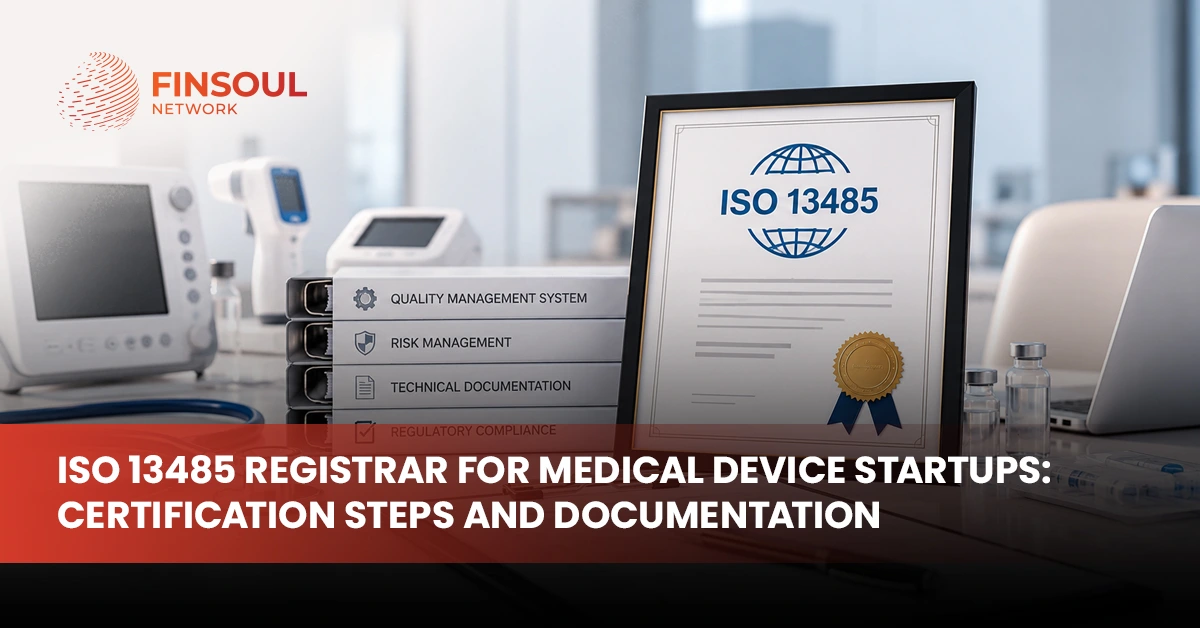
Launching a medical device startup involves more than developing an innovative product. You must establish reliable quality processes, maintain technical documentation, manage product risks, and demonstrate compliance with applicable regulatory requirements. Choosing the right ISO 13485 registrar for medical device certification is an important step toward building a quality management system (QMS) that supports your business as it grows.
For startups, certification can seem complicated because teams often have limited budgets, small workforces, and evolving product designs. However, a structured approach helps you prepare the right documents, understand audit expectations, and avoid unnecessary delays.
Finsoul Network Bahrain can help businesses understand the certification journey and identify the preparation steps needed before approaching a suitable certification body. This guide explains eligibility, documentation, certification stages, and practical ways to prepare your startup for an audit.
What Is ISO 13485 Certification, and Why Does It Matter?
ISO 13485:2016 is an international standard specifying quality management system requirements for organizations involved in medical device design, development, production, storage, distribution, installation, servicing, and related activities. It focuses on consistent product quality, risk management, and applicable regulatory requirements.
For a startup, implementing ISO 13485 helps establish repeatable procedures before operations become more complex. It also demonstrates a commitment to controlled processes when communicating with customers, suppliers, investors, and potential business partners.
Working with an experienced ISO 13485 registrar for medical device certification allows your organization to undergo an independent assessment of its quality management system. However, ISO itself does not issue certificates; independent certification bodies perform this work. Certification also does not automatically approve a medical device for sale in every market.
Who Needs ISO 13485 Certification?
ISO 13485 may be relevant to startups that design, manufacture, distribute, install, or service medical devices. It can also apply to suppliers providing components, materials, sterilization, calibration, or other services associated with medical devices.
Your exact requirements depend on your business activities, product type, target markets, customer contracts, and applicable regulations. Some organizations may be required to demonstrate conformity through specific regulatory pathways, while others pursue certification to meet customer expectations or strengthen their quality systems.
Before selecting an ISO 13485 certification body, define what your organization actually does. A startup developing a wearable monitoring device may need design controls and software-related risk management, while a company distributing finished medical devices may focus more heavily on supplier controls, traceability, storage, and complaint handling.
Clearly defining these activities helps establish an appropriate certification scope and prevents you from paying for an assessment that does not match your business needs.
How to Choose the Right Registrar
Not every certification provider is suitable for every medical device business. Your chosen provider should have relevant technical competence, an appropriate accreditation scope, and experience assessing organizations with activities similar to yours.
When evaluating an ISO 13485 registrar for medical device certification, consider these factors:
- Accreditation: Verify the certification body’s accreditation status and confirm that ISO 13485 and your relevant technical areas fall within its approved scope.
- Industry experience: Ask whether its auditors understand your product category, manufacturing methods, software, sterilization processes, or distribution activities.
- Certification scope: Confirm that the proposed scope accurately describes your locations, products, and operations.
- Audit arrangements: Request details about audit stages, estimated duration, corrective actions, surveillance audits, and recertification.
- Cost transparency: Compare quotations carefully, including application fees, audit days, travel, follow-up assessments, and ongoing certification costs.
An accredited certificate can carry greater recognition than an unaccredited certificate, depending on the requirements of your customers and target markets. Verify the provider’s credentials directly with the relevant accreditation body rather than relying only on marketing claims.
ISO 13485 Certification for Startups: Step-by-Step Process
A startup does not need to build a large compliance department before beginning. It does, however, need a functioning quality management system that reflects its actual activities and meets the applicable requirements.
Step 1: Define Your Business and Certification Scope
Identify the devices you develop or supply, the activities performed internally, and the processes handled by external suppliers. Decide which locations and operations should be included in the certification scope.
Document your intended markets and identify the regulatory requirements relevant to your role. These decisions establish the foundation for ISO 13485 certification for startups and help prevent gaps during the audit.
Step 2: Conduct a Gap Assessment
Compare your existing processes with ISO 13485 requirements. Review management responsibilities, document control, risk management, supplier evaluation, product development, production controls, complaint handling, and corrective actions.
Record missing procedures, incomplete records, and responsibilities that have not been assigned. Prioritize gaps according to their impact on product safety, compliance, and quality.
Step 3: Develop and Implement Your QMS
Create the policies, procedures, work instructions, and records needed for your operations. Your documentation should explain how tasks are performed and provide evidence that employees follow the defined processes.
Avoid copying generic templates without adapting them. Your quality system must reflect your actual device, workforce, suppliers, and operational risks.
Step 4: Train Employees and Generate Records
Employees need to understand their responsibilities and follow approved procedures. Maintain training records and ensure that relevant personnel understand document control, nonconformity reporting, product handling, and other assigned duties.
The system must be implemented in practice, not simply documented on paper. Auditors may examine records and interview employees to verify that procedures are being followed.
Step 5: Conduct Internal Audits and Management Review
Review your QMS internally before the certification audit. Check whether procedures are effective, records are complete, and identified problems have been addressed.
Management should review the system’s performance, audit findings, customer feedback, risks, and opportunities for improvement. Resolve significant issues and retain evidence of the actions taken.
Step 6: Complete the Certification Audit
Contact your selected certification body when your QMS is sufficiently implemented and ready for independent assessment. The process commonly includes a Stage 1 audit, which evaluates readiness and documentation, followed by a Stage 2 audit assessing implementation and effectiveness.
If the auditor identifies nonconformities, you must address them and provide appropriate evidence. Certification is granted only after the certification body completes its review and determines that the applicable requirements have been met.
Essential Documentation for Medical Device Startups
Documentation is one of the most demanding parts of preparing for certification. The exact documents required depend on your activities, the devices involved, and applicable regulatory obligations.
A practical preparation checklist includes:
- Quality management documents: Quality policy, quality objectives, QMS scope, process descriptions, and assigned responsibilities.
- Document control records: Approved procedures, revision histories, document access controls, and record-retention arrangements.
- Risk management files: Identified hazards, risk evaluations, risk-control measures, and evidence that controls have been reviewed.
- Design and development records: Where applicable, design plans, requirements, verification, validation, design reviews, and change records.
- Supplier documentation: Supplier qualification, evaluation criteria, purchasing controls, and incoming inspection records where relevant.
- Production and traceability records: Manufacturing instructions, inspection results, equipment maintenance, calibration, and product identification records, as applicable.
- Training records: Evidence that employees have the qualifications and competence needed for their assigned duties.
- Complaint and corrective-action records: Procedures for handling complaints, investigating problems, managing nonconforming products, and implementing corrective actions.
- Internal audit and management review records: Audit schedules, findings, meeting outputs, and documented follow-up actions.
Medical device technical documentation may also include product specifications, labeling, verification and validation evidence, and information supporting applicable regulatory submissions. These product-specific records are not interchangeable with the QMS documentation needed for ISO 13485 certification.
Organizing these materials before engaging an ISO 13485 registrar for medical device certification helps your team respond efficiently to document requests and demonstrate that its processes are operating as intended.
Common Certification Challenges and How to Avoid Them
Startups often face similar obstacles during implementation and audits. Recognizing them early can save time and reduce avoidable costs.
Using generic procedures: Customize templates to match actual processes and ensure staff follow them.
Incomplete risk management: Keep risk assessments updated and linked to product design, suppliers, production, and post-market activities.
Missing implementation records: Maintain dated records proving that procedures are implemented effectively.
Unclear supplier responsibilities: Define supplier requirements, evaluate performance, and maintain appropriate oversight.
Choosing a provider based only on price: Verify accreditation, certification scope, audit requirements, and total costs before selecting a provider.
Qualified ISO 13485 consultants can help identify these weaknesses, organize documentation, and prepare your team for assessment. However, consultants should remain separate from the independent certification decision to protect the certification body’s impartiality.
How Long Does Certification Take, and What Does It Cost?
There is no universal timeline or fixed price for ISO 13485 certification. Preparation may take several months, depending on the startup’s readiness, product complexity, number of locations, outsourced processes, and the maturity of its quality system.
Costs can include consulting support, employee training, documentation development, internal audits, certification-body fees, travel, and follow-up assessments. Ongoing surveillance and eventual recertification should also be included in your budget.
To obtain a realistic estimate, define your certification scope, identify your existing QMS gaps, and request detailed quotations from suitable certification bodies. Building these activities into your development plan can prevent compliance preparation from becoming a last-minute obstacle to market entry.
How to Prepare Your Startup for ISO 13485 Certification
Preparing for certification is easier when your startup has a clear implementation plan and understands the documentation and quality management requirements. Start by reviewing your existing processes, identifying compliance gaps, and organizing the records needed to demonstrate that your quality management system is working effectively.
The following table outlines the key preparation areas for medical device startups:
| Preparation Area | Required Action |
| QMS Assessment | Review existing processes and identify gaps against ISO 13485 requirements. |
| Documentation | Prepare quality policies, procedures, risk management files, and relevant technical records. |
| Employee Training | Ensure staff understand their responsibilities and maintain training records. |
| Risk Management | Identify potential product risks and document appropriate control measures. |
| Internal Audits | Check whether procedures are implemented effectively and address identified nonconformities. |
| Certification Body Selection | Verify accreditation, technical scope, audit arrangements, and relevant industry experience. |
Consider seeking guidance from qualified ISO 13485 consultants if your team needs support with documentation, risk management, internal audits, or certification readiness. Before choosing a certification provider, verify its accreditation, technical scope, and experience with your type of medical device.
A well-prepared quality management system can help your startup improve consistency, manage risks, and build a stronger foundation for regulatory compliance and long-term growth.
Conclusion
Selecting an appropriate ISO 13485 registrar for medical device certification requires careful attention to accreditation, technical scope, audit arrangements, and your startup’s regulatory objectives. A well-implemented QMS, supported by complete documentation and trained employees, makes the assessment process more manageable and creates a foundation for long-term quality improvement.
Finsoul Network Bahrain can be a starting point for discussing your preparation needs and planning the next steps. Define your certification scope, close documentation gaps, and verify the credentials of your chosen certification body before proceeding.
Get Expert Guidance for ISO 13485 Certification
Preparing your medical device startup for ISO 13485 certification? Finsoul Network Bahrain can help you understand documentation requirements, plan your certification steps, and identify the right certification pathway for your business.
Contact our team today to discuss your needs and take the next step toward building a compliant, quality-focused medical device business.
Office Address: Office 41, Building 2737, Road 3649, Seef, Al Manama 436, Bahrain
Email: info@finsoulnetwork.com
Phone: +973 3383 2422
Frequently Asked Questions
What does an ISO 13485 registrar do?
A registrar, also known as a certification body, independently assesses whether an organization’s quality management system meets ISO 13485 requirements. If the requirements are satisfied, the body can issue certification within its approved scope.
Is ISO 13485 certification mandatory for every medical device startup?
Not in every situation. Requirements depend on the relevant market, device category, business role, customer contracts, and applicable regulations.
What documents should a startup prepare first?
Begin with your QMS scope, quality policy, process procedures, risk management records, supplier controls, and applicable design or production records. The complete documentation set will depend on your activities and regulatory obligations.
Can a startup obtain certification without hiring a consultant?
Yes. A startup can implement its QMS internally if it has the necessary knowledge, resources, and competence. External support may help when the team lacks experience with medical device quality requirements.
Does ISO 13485 certification approve a medical device for sale?
No. It certifies the organization’s quality management system, not the individual device. Market access may require separate registrations, approvals, technical documentation, or conformity assessments.