
Author name: waseem

HACCP Certification Cost in Bahrain
Blog

HACCP Certification Cost in Bahrain: Factors That Affect Pricing

If you run a food business in Bahrain, you have probably asked one question more than any other: what is the real HACCP Certification Cost in Bahrain? The answer depends on several moving parts, from the size of your kitchen to the number of staff who need training. This guide breaks down every factor that shapes food safety certification pricing, so you can budget accurately and avoid surprise fees. Finsoul Network Bahrain works with restaurants, hotels, and food manufacturers across the Kingdom, and this article draws on that hands-on experience to give you a clear, practical picture. What Is HACCP Certification and Why It Matters HACCP stands for Hazard Analysis and Critical Control Points. It is a food safety management system that identifies, evaluates, and controls hazards at every stage of food handling, from raw ingredient delivery to final service. The system rests on seven core principles, including hazard analysis, setting critical limits, and establishing monitoring procedures at each control point. Businesses that pursue HACCP certification Bahrain gain a documented system that protects customers, satisfies regulators, and builds trust with suppliers and buyers. In Bahrain, food safety expectations have tightened as tourism, hospitality, and food export activity grow. Municipalities and health authorities now expect food businesses to show proof of structured hazard control, not just good intentions. This is why understanding certification pricing in the Kingdom matters just as much as understanding the process itself. Getting certified is not only a compliance step, but it is also a competitive advantage when bidding for contracts with hotels, airlines, or export markets. Factors That Affect HACCP Certification Cost in Bahrain The HACCP Certification Cost in Bahrain is never a flat number. It shifts based on several practical variables that auditors and consultants assess before quoting a price. Business size and staff count: larger teams need more training sessions and documentation Complexity of food operations: a bakery has fewer hazard points than a full-service restaurant with raw meat handling Number of facility locations: for multi-branch operations, pay per site Current state of food safety practices: businesses starting from scratch pay more than those with existing hygiene systems Certification body chosen: accredited international bodies often charge more than local-only providers Consulting support required: gap analysis, staff training, and documentation help add to the total HACCP certification price Bahrain Audit and re-certification frequency: annual surveillance audits add ongoing cost beyond the initial certificate Every one of these factors combines to determine the final HACCP Certification Cost in Bahrain for your specific business, which is why generic online quotes rarely match what you actually pay. Average HACCP Certification Price Bahrain: Cost Breakdown While exact figures vary by scope, most Bahrain-based food businesses can expect costs to fall within general tiers depending on operation size and readiness level. Business Type Typical Scope Estimated Cost Range Small food outlet or cafe Single site, basic menu Lower tier Mid-size restaurant or catering unit Full kitchen, multiple food categories Mid tier Food manufacturing or export facility Complex processing, multiple hazard points Higher tier These ranges reflect the general HACCP certification price Bahrain businesses report, and actual quotes depend on the audit scope and consultant support needed. Finsoul Network Bahrain provides a free scoping call before quoting, so you know your real cost before committing to any package. HACCP Certification Process in Bahrain Understanding the certification steps helps explain why pricing varies so widely between businesses, since each stage requires a different level of consultant time and facility involvement. Gap analysis: a consultant reviews your current food safety practices against HACCP requirements Documentation development: written procedures, hazard logs, and control point records are created Staff training: employees learn hazard identification and monitoring duties Implementation period: the system runs in your facility for a set trial window External audit: by an accredited certification body verifies compliance and issues the certificate Each stage adds time and labor, which directly shapes the final invoice. Businesses that already keep clean records typically move through these stages faster and pay less overall. Cost-Saving Tips for HACCP Certification in Bahrain Smart preparation can lower your total spend without cutting corners on food safety. Start with an internal self-audit before hiring a consultant, so you pay for guidance rather than basic problem discovery Train staff in batches ahead of the official schedule to reduce the number of paid training sessions Bundle multiple branches into one contract rather than certifying each site separately Keep digital hygiene records year-round so the gap analysis phase takes less consultant time Ask your provider for a fixed-scope quote instead of an hourly rate, which protects you from cost creep during implementation These steps do not just reduce fees; they also shorten the overall timeline, which means your business gets certified and back to normal operations faster. Who Needs HACCP Certification in Bahrain Restaurants and cafes serving the public Hotels and resorts with in-house catering Food manufacturers and processing plants Bakeries and confectionery producers Catering companies and event food suppliers Food exporters targeting the GCC or international markets Supermarkets with fresh food or deli counters Central kitchens supplying multiple restaurant branches Institutional canteens in schools, hospitals, and offices Food businesses that serve high volumes of customers daily, or that handle raw meat, seafood, or dairy, tend to face stricter scrutiny during municipal inspections. Certification gives these businesses a documented defense during any hygiene dispute or customer complaint. Documents Required for HACCP Certification Document Purpose Facility floor plan Maps hazard flow and control points Supplier and ingredient list Traces raw material sources Staff training records Confirms hygiene competency Cleaning and sanitation schedule Shows routine hazard control Existing food safety policy Baseline for gap analysis HACCP Regulatory Bodies in Bahrain Bahrain Municipality oversees food establishment licensing and hygiene inspections across the Kingdom, and HACCP compliance strengthens standing during these routine checks. Ministry of Health Bahrain sets broader public health standards that intersect with food safety requirements for commercial kitchens and processing sites. Businesses that export food products may also need to align with GCC Standardization
ISO 14001 Certification in Bahrain
Blog

ISO 14001 Certification in Bahrain: Environmental Compliance Guide for Industrial Companies

Industrial growth in Bahrain has brought real economic benefits, but it has also raised the pressure on manufacturers, contractors, and energy companies to manage their environmental footprint responsibly. This is exactly where ISO 14001 Certification in Bahrain becomes essential. It gives industrial companies a structured way to control waste, emissions, and resource use while proving to regulators, clients, and investors that environmental responsibility is built into daily operations, not treated as an afterthought. As Bahrain’s manufacturing, energy, and construction sectors expand, the Ministry of Municipalities Affairs and Agriculture, along with private-sector clients, is placing more weight on documented environmental performance. Companies that can show a recognized, audited system tend to move faster through approvals, tenders, and partnership agreements than those relying on informal practices. In this guide, we break down everything industrial businesses in Bahrain need to know about achieving and maintaining this certification, from the core requirements to the practical steps of implementation, so your facility can build genuine, long-term environmental credibility. With expert guidance from Finsoul Network Bahrain, businesses can simplify the certification process and establish an Environmental Management System that supports long-term compliance and sustainable growth. What Is ISO 14001 Certification? ISO 14001 is the internationally recognized standard for an Environmental Management System (EMS). It sets out the framework a company needs to identify environmental risks, reduce harmful impacts, and continuously improve how it handles resources like water, energy, and waste. For industrial operators, ISO 14001 Certification in Bahrain isn’t just a paperwork exercise; it’s a practical system that shapes how factories, plants, and job sites operate every single day. Why ISO 14001 Certification in Bahrain Matters for Industrial Companies Bahrain’s industrial sector, spanning aluminium production, petrochemicals, construction, and manufacturing, operates under growing scrutiny from environmental authorities. Companies pursuing this certification gain several advantages: Reduced risk of regulatory fines and unplanned shutdowns Lower operational costs through better resource efficiency Stronger reputation with government tenders and international clients A documented system for managing environmental incidents before they escalate Easier onboarding with multinational buyers who require certified suppliers For any industrial company, ISO 14001 Certification in Bahrain is quickly becoming a baseline expectation rather than a competitive extra, particularly for firms bidding on large infrastructure or energy-sector contracts. Understanding the Environmental Management System (EMS) Requirement At the heart of the standard lies the Environmental Management System that Bahrain companies must build and maintain. An EMS covers: Environmental policy: a documented commitment from leadership Risk and impact assessment: identifying where operations affect air, water, and soil Legal compliance tracking: mapping obligations under Bahrain’s environmental laws Operational controls: procedures for waste disposal, emissions, and spill response Monitoring and review: regular audits to confirm the system is working A well-built EMS doesn’t just satisfy auditors; it becomes the operational backbone for safer, cleaner production. Companies often find that once these controls are in place, near-misses and unplanned environmental incidents drop noticeably within the first year, simply because problems are caught earlier through routine monitoring rather than discovered after the fact. Step-by-Step ISO 14001 Certification Process in Bahrain Getting certified follows a fairly consistent path across industries: Gap Analysis: Assess current environmental practices against ISO 14001 requirements. EMS Documentation: Build policies, procedures, and records aligned with the standard. Staff Training: Ensure employees understand their role in environmental compliance. Internal Audit: Test the system internally before the external review. Management Review: Leadership evaluates performance and closes any gaps. External Certification Audit: An accredited body conducts Stage 1 and Stage 2 audits. Certification Issued: Valid for three years, with annual surveillance audits. Companies that follow this process methodically tend to complete certification within a few months, depending on facility size and existing documentation maturity. Facilities with multiple production lines or several site locations should budget extra time for coordinating audits across each area, since Stage 2 assessments typically involve on-site inspection of actual operational controls, not just paperwork review. Key Benefits of ISO 14001 Certification for Bahraini Industries Beyond compliance, certified companies typically see measurable business gains: Cost savings from reduced energy, water, and material waste Improved supply chain access, since many international buyers require certified suppliers Better incident preparedness, reducing downtime from environmental non-compliance Enhanced employee awareness around sustainability practices Stronger standing in government and private-sector tenders These benefits explain why this standard has become a strategic priority, not just a regulatory checkbox, for forward-looking manufacturers. Companies that track their savings closely often report that energy and waste-reduction gains alone offset the cost of certification within the first two to three years. The Role of an ISO 14001 Consultant in Bahrain Many industrial companies attempt certification internally and underestimate the documentation and audit-readiness work involved. This is where an experienced environmental consultant can make the difference between a smooth certification and a stalled one. A qualified consultant typically helps with: Conducting the initial gap analysis Drafting EMS documentation tailored to your industry Training staff and management on environmental procedures Preparing the facility for external audits Liaising with certification bodies on scheduling and scope Working with a skilled ISO 14001 consultant Bahrain reduces the time, cost, and risk of failed audits, especially for companies pursuing certification for the first time. It also helps avoid a common pitfall: building documentation that looks compliant on paper but doesn’t reflect what actually happens on the shop floor, which is usually where external auditors focus their attention. Industries in Bahrain That Benefit Most While ISO 14001 applies broadly, certain sectors see the highest impact: Manufacturing and heavy industry: controlling emissions, chemical handling, and industrial waste streams Oil, gas, and petrochemical operations: managing spill risk, resource consumption, and hazardous material storage Construction and infrastructure contractors: reducing dust, noise, and material waste on active job sites Food processing and packaging plants: handling wastewater, packaging waste, and energy use Logistics and warehousing facilities: managing fuel consumption, fleet emissions, and storage of regulated materials For these sectors, this certification directly addresses the environmental risks most likely to trigger regulatory attention or client audits. Even companies outside these categories, such as facilities-management or

ISO 13485 Certification in Bahrain
Blog

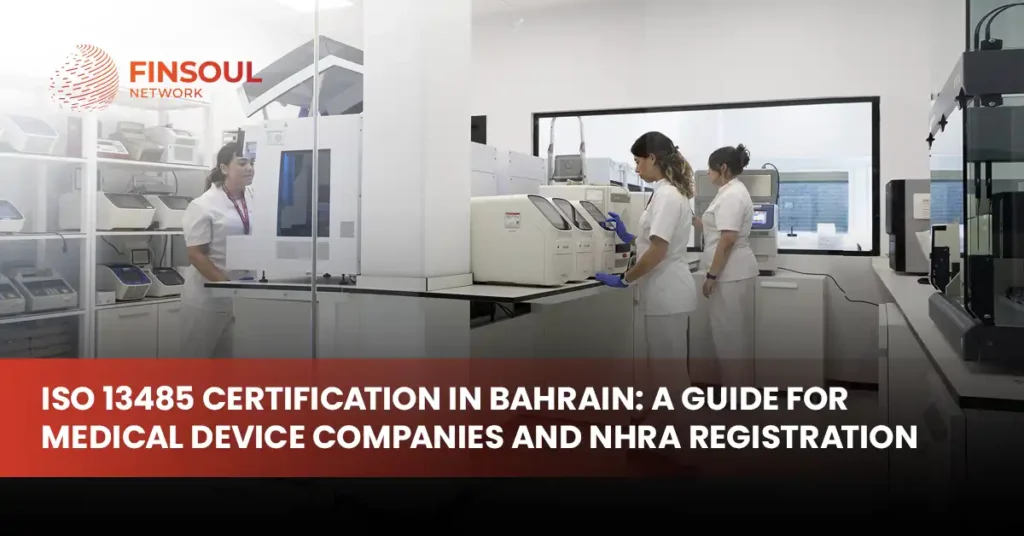
ISO 13485 Certification in Bahrain: A Guide for Medical Device Companies and NHRA Registration

ISO 13485 Certification in Bahrain is fast becoming a non-negotiable requirement for medical device manufacturers, importers, and distributors who want to operate legally and competitively in the Kingdom’s healthcare sector. As Bahrain’s National Health Regulatory Authority (NHRA) tightens its compliance framework, more companies are turning to structured quality management systems to meet both local and international expectations. This guide covers everything you need to know about this certification, its link to NHRA registration, and how a trusted partner like Finsoul Network Bahrain can simplify the entire journey. What Is ISO 13485? ISO 13485 is the internationally recognized standard for a Quality Management System (QMS) designed specifically for organizations involved in the design, production, installation, and servicing of medical devices. Unlike general quality standards, it focuses heavily on regulatory compliance, risk management, and product safety throughout the device lifecycle. For companies pursuing this certification, the standard forms the backbone of demonstrating that their processes consistently produce safe, effective, and compliant medical devices. It also lays the foundation for subsequent regulatory steps, including local market approvals and export documentation. Why This Certification Matters for Medical Device Companies Bahrain’s medical device market is growing rapidly, driven by increased healthcare investment and rising demand for imported and locally assembled devices. ISO 13485 Certification in Bahrain matters because it: Builds trust with hospitals, distributors, and regulatory bodies Demonstrates a company’s commitment to patient safety and product quality Opens doors to export markets that require ISO 13485 compliance Reduces the risk of product recalls, non-conformities, and regulatory penalties Strengthens a company’s position when bidding for government and hospital tenders Without this certification, many companies struggle even to begin the broader process of medical device certification Bahrain authorities require before a product can legally enter the market. It also signals to investors and partners that quality is embedded in the organization’s culture, not just a compliance checkbox. ISO 13485 Certification in Bahrain and NHRA Registration The NHRA is the governing body responsible for regulating pharmaceuticals, medical devices, and healthcare professionals in Bahrain. For any company looking to register a medical device with the NHRA, holding a valid ISO 13485 certificate is often a prerequisite or a strongly recommended supporting document. This is where ISO 13485 Certification in Bahrain and NHRA registration become closely intertwined, with one process feeding directly into the other. The NHRA evaluates whether a company’s quality management system aligns with international best practices before granting market authorization. Companies that complete this certification typically experience a smoother, faster NHRA registration process because much of the documentation and quality evidence overlap between the two frameworks. This overlap saves both time and internal resources, especially for companies managing multiple product lines or planning to expand into neighboring GCC markets later. Benefits of Medical Device Certification Bahrain Companies Can Expect Pursuing medical device certification Bahrain through the ISO 13485 framework brings several tangible advantages: Market access: Certification is often mandatory for tenders, hospital contracts, and government procurement. Competitive advantage: Certified companies stand out against uncertified competitors in a crowded market. Operational efficiency: A documented QMS reduces errors, waste, and costly rework. Regulatory alignment: Simplifies future NHRA submissions, renewals, and inspections. International credibility: Recognized globally, easing entry into GCC and international markets. These benefits compound over time, as a well-maintained quality system continues to reduce operational friction long after the initial certification is granted. Step-by-Step Process for ISO 13485 Certification in Bahrain Achieving this certification generally follows these stages: Gap Analysis: Assessing current processes against ISO 13485 requirements to identify weak points. Documentation Development: Creating quality manuals, standard operating procedures, and risk management records. Implementation: Rolling out the QMS across departments and training relevant staff. Internal Audit: Verifying readiness internally before the external assessment begins. Certification Audit: Conducted by an accredited body, usually across two distinct stages. Certificate Issuance: Valid for three years, subject to annual surveillance audits. Each stage requires careful planning and realistic timelines, which is why many businesses choose to work with an experienced local partner rather than attempting the process alone. Role of an ISO 13485 Consultant Bahrain Businesses Rely On An experienced ISO 13485 consultant Bahrain professional does far more than fill out paperwork. Consultants help companies: Interpret complex regulatory language into practical, actionable steps Build a QMS tailored to the company’s specific device category and risk class Train staff on quality processes, internal audits, and audit readiness Liaise with certification bodies and the NHRA where coordination is needed Engaging a knowledgeable consultant, such as Finsoul Network Bahrain, significantly reduces the time and internal resources needed to achieve ISO 13485 Certification in Bahrain, while minimizing the risk of failed audits and repeated corrective actions. What to Expect During an ISO 13485 Audit Bahrain Assessment The ISO 13485 audit Bahrain process typically occurs in two stages. Stage one reviews documentation and organizational readiness, while stage two evaluates actual implementation on-site, examining records, staff interviews, and process controls. Auditors look for objective evidence that the QMS is not just documented but genuinely followed in daily operations across every relevant department. Passing this audit requires more than good documentation — it demands a culture of quality embedded across production, procurement, and customer service teams. Annual surveillance audits then ensure the system remains compliant year after year, rather than treating certification as a one-time achievement. Documentation Required for Certification Typical documentation includes: Quality manual and policy statements Risk management files aligned with ISO 14971 Design and development records Supplier evaluation and control procedures Corrective and preventive action (CAPA) logs Internal audit reports and management review minutes Well-organized documentation is often the difference between a smooth audit experience and a stressful one filled with non-conformities and follow-up visits. Cost and Timeline Costs vary depending on company size, device complexity, and current QMS maturity, but most Bahrain-based medical device companies can expect the overall process to take between four and nine months. Investing in professional guidance early, through an experienced consultant, often shortens this timeline considerably and prevents costly rework further down the line. Common Challenges Companies Face Underestimating

ISO 27001 Certification in Bahrain
Blog

ISO 27001 Certification in Bahrain: Cost, Process & Why Banks and Tenders Require It (2026 Guide)

Data breaches, ransomware attacks, and tender rejections have pushed information security to the top of the boardroom agenda across the Kingdom. ISO 27001 Certification in Bahrain has moved from a nice-to-have credential to a baseline requirement for any company that wants to work with banks, win government contracts, or handle client data with confidence. Interest in ISO 27001 Bahrain compliance has risen sharply as more sectors digitize their operations and face closer scrutiny from regulators and enterprise clients alike. Businesses seeking a structured and efficient certification process often work with experienced consultants such as Finsoul Network Bahrain to prepare for implementation and certification audits. Whether you are pursuing certification for regulatory compliance, customer trust, or business growth, understanding the requirements early can help reduce delays and improve audit readiness. What Is ISO 27001 and Why It Matters in Bahrain ISO 27001 is the international standard for an Information Security Management System, or ISMS. It gives an organization a structured way to identify security risks, apply controls, and prove that sensitive data is handled responsibly. ISO 27001 Bahrain adoption has grown quickly as the Kingdom’s digital economy expands, driven by cloud adoption, the AWS Bahrain Region, and a fast-growing fintech sector. For most companies, the certification is not just an IT exercise. It touches HR, legal, operations, and vendor management because information security depends on how people, not just systems, handle data. A company that holds ISO 27001 Certification in Bahrain signals to clients, regulators, and partners that its security practices have been independently verified, not just self-reported. Why Banks Require ISO 27001 Certification in Bahrain The Central Bank of Bahrain enforces Module TC, its Technology Controls framework, which sets detailed expectations for information security governance, incident response, and third-party risk management. Banks, insurance firms, and fintech operators map these requirements directly against ISO 27001 controls. When a bank works with a vendor, payment processor, or outsourced service provider, it needs assurance that the third party will not become a weak link. ISO 27001 Certification in Bahrain gives banks documented proof of that assurance instead of relying on a vendor’s word. Financial institutions increasingly refuse to onboard suppliers who cannot show a valid certificate, particularly when the vendor will touch customer data, payment systems, or core banking infrastructure. Why Government and Corporate Tenders Require It Tender committees in Bahrain, whether government ministries or large private groups, use ISO 27001 as a prequalification filter. It removes the burden of manually assessing every bidder’s security posture and instead relies on an accredited certification body’s audit findings. Companies bidding for IT services, outsourcing contracts, or any project involving data handling frequently find ISO 27001 listed as a mandatory or heavily weighted criterion. Without it, a technically strong proposal can still be disqualified before it reaches the evaluation stage. This is one of the clearest commercial reasons businesses pursue ISO 27001 Bahrain certification even when they are not legally obligated to. The ISO 27001 Certification Process in Bahrain The path to certification follows a consistent sequence, though the depth of work depends on company size and existing security maturity. 1. Define the Scope The organization identifies which departments, systems, locations, and data types the ISMS will cover. A narrow scope moves faster, but tender and banking clients often expect the certificate to cover the full operation. 2. Conduct a Gap Analysis A gap analysis compares current security practices against ISO 27001’s Annex A controls to reveal where policies, technical controls, or documentation are missing. 3. Perform a Risk Assessment The company identifies threats to its information assets, evaluates likelihood and impact, and decides which risks to treat, transfer, accept, or avoid. 4. Build the ISMS Documentation This stage produces the information security policy, the Statement of Applicability, risk treatment plans, and operational procedures covering access control, incident response, and supplier security. 5. Train Staff and Implement Controls Employees need to understand their role in protecting information, since most breaches trace back to human error rather than technical failure. 6. Run an Internal Audit An internal or independent auditor checks whether the ISMS is actually working before the external certification body gets involved. 7. Complete the Certification Audit An accredited certification body conducts a two-stage audit: first reviewing documentation, then assessing implementation on the ground. Any nonconformities must be corrected before the certificate is issued. Working with an experienced ISO 27001 consultant Bahrain businesses trust can shorten this timeline significantly, since consultants know which gaps auditors flag most often and how to prepare documentation that meets audit standards the first time. Cost of ISO 27001 Certification in Bahrain There is no fixed price, since cost depends on company size, scope, the number of locations, and how mature existing security practices already are. The main cost components typically include: Cost Component What It Covers Gap analysis and consulting Assessing current practices and building the implementation roadmap Documentation and ISMS setup Policies, risk registers, Statement of Applicability Staff training Awareness sessions and role-specific security training Certification audit fees Stage 1 and Stage 2 audits by an accredited certification body Surveillance audits Annual checks required to keep the certificate valid over its three-year cycle Businesses working with reliable ISO 27001 certification services Bahrain providers usually get a scoped quote after an initial assessment, since quoting a flat number without understanding the organization’s data environment tends to underestimate the real work involved. How Long Does Certification Take Most organizations complete ISO 27001 certification in six to nine months, longer than standards like ISO 9001 because of the technical depth required for risk assessment and control implementation. Companies with immature security practices, multiple locations, or complex IT environments should plan for the upper end of that range. Common Challenges Businesses Face During Certification Underestimating documentation requirements: Many businesses overlook the amount of documentation needed. Preparing a risk treatment plan and a Statement of Applicability (SoA) that meets auditor expectations often requires multiple revisions. Limited employee awareness and engagement: Information security controls are only effective when employees understand and follow them.

Halal Certification in Bahrain
Blog

Halal Certification in Bahrain 2026: New Mandatory Rules, Process, and Cost Explained

Bahrain has moved from a voluntary Halal system to a structured national framework, and this shift changes how food, beverage, and personal care businesses operate in the Kingdom. Halal Certification in Bahrain is no longer just a marketing advantage. Under Cabinet Decision No. 61 of 2024, it is becoming a formal regulatory requirement tied to a national Halal system administered by the Ministry of Municipalities Affairs and Agriculture (MMAA). If you manufacture, import, or sell food and related products in Bahrain, understanding the new rules, the certification steps, and realistic costs is now essential to staying in business. What Is Halal Certification and Why It Matters in Bahrain Halal certification confirms that a product, facility, or process meets Islamic dietary law and Sharia-compliant handling standards, from sourcing and slaughter through processing, storage, and transport. It is not limited to meat. Beverages, additives, packaged food, cosmetics, and pharmaceuticals can all fall under Halal scope depending on their ingredients and production methods. Why it matters now: the Kingdom’s new national Halal system aligns Bahrain with the GCC Accreditation Center (GAC) framework, which means certificates issued locally are recognized across Gulf markets. For businesses selling into Saudi Arabia, the UAE, Kuwait, and beyond, this alignment removes a major cross-border barrier. For businesses selling only within Bahrain, mandatory implementation means non-compliant products will eventually face corrective action from regulators, not just lost sales opportunities. New Mandatory Rules Under the 2024 Cabinet Decision The national Halal system in Bahrain is built on Cabinet Decision No. 61 of 2024 concerning Halal Products. This decision creates a legislative framework that governs slaughtering, production, and handling processes for both local and imported goods sold anywhere in the Bahraini market. Under the new structure: Certificates must be issued by accredited conformity assessment bodies designated by the MMAA, not by any organization claiming Halal authority The system applies to both local and imported products, closing a gap that previously let some imported goods bypass local scrutiny. Registered factories and slaughterhouses are directly supervised as part of the certification process. Non-compliant businesses face corrective measures, which may escalate from guidance to formal penalties if issues are not resolved. The framework is designed in coordination with the GAC, so Bahraini Halal certificates hold recognition value across the wider Gulf region This is the core change businesses need to plan around. Halal Certification in Bahrain has shifted from a brand differentiator to a compliance obligation with real enforcement mechanisms behind it. Given the added complexity, many companies now bring in Halal certification consultants Bahrain trusts before they even begin the paperwork. Who Needs Halal Certification Not every business is affected equally, but the scope is wide. You likely need certification or should confirm your exposure if you fall into one of these categories: Food and beverage manufacturers producing meat, poultry, dairy, or packaged goods Importers bringing food, cosmetics, or pharmaceutical products into Bahrain Slaughterhouses and meat processing facilities Hotels, restaurants, and hospitality businesses marketing Halal menus Cosmetic and personal care brands using animal-derived or alcohol-based ingredients Retailers and distributors placing private-label food products on Bahraini shelves Export-focused businesses targeting Saudi Arabia, the UAE, or other GCC markets Halal Certification Process in Bahrain Explained Understanding the Halal certification process Bahrain has adopted helps businesses prepare documentation early and move through each stage without delays. It follows a structured sequence set by the MMAA in coordination with the GAC. Step 1: Initial Assessment and Documentation Your business gathers commercial registration details, product formulations, and supply chain information to confirm which category of certification applies. Step 2: Application Submission The request is submitted through an accredited conformity assessment body, along with the required registration and administrative fees. Step 3: Facility Inspection and Audit Auditors review production sites, slaughter facilities, or processing lines to confirm Sharia-compliant handling, sourcing, and separation from non-Halal materials. Step 4: Corrective Action, If Needed If gaps are found, the business receives guidance to correct processes, labeling, or documentation before certification proceeds. Step 5: Certificate Issuance Once compliance is confirmed, the accredited body issues the Halal certificate, which is then recognized under the national system and, where applicable, across GCC markets through GAC alignment. Most straightforward applications move through the Halal certification process Bahrain requires within 4 to 8 weeks, though timelines extend for businesses with multiple product lines or complex supply chains. Cost of Halal Certification in Bahrain There is no single flat fee. The Ministry has confirmed that costs are calculated based on the scale of business activity and the type of products involved, so a single-product bakery pays significantly less than a multi-line meat processing facility. Cost Component What It Covers Registration fees Filing and processing the initial certification request Conformity assessment fees Facility inspection and auditing by the accredited body Accreditation-related fees Costs tied to the certifying body’s approval under the GAC framework Costs and timelines vary by project scope, and businesses should treat any published number as an estimate rather than a fixed price until a formal quote is issued. Documentation Required for Halal Certification Document / Information Purpose Commercial registration Confirms the business is legally registered in Bahrain Chamber of Commerce registration Verifies active commercial standing Social insurance certificate Confirms workforce compliance and nationalization details Insurance policy or bank guarantee Covers general and professional liability during certification Declaration of no liability Formal commitment submitted to the relevant authority Product formulation and process records Allows auditors to assess Sharia compliance across the supply chain Regulatory Bodies Behind Halal Certification in Bahrain Ministry of Municipalities Affairs and Agriculture (MMAA): the lead authority overseeing the national Halal system, responsible for designating accredited conformity assessment bodies and enforcing the 2024 Cabinet Decision. GCC Accreditation Center (GAC): the technical partner that aligns Bahrain’s Halal framework with Gulf-wide standards, giving certified businesses recognition beyond Bahrain’s borders. Ministry of Public Health (MoPH): publishes guidance for importing Halal food and identifies bodies authorized to issue Halal slaughtering certificates, working alongside the MMAA on food safety matters. Why Businesses Choose Finsoul Network Bahrain Direct experience

documents required for iso 27001 certification
Blog

Documents Required for ISO 27001 Certification: Complete List Explained

If you are preparing for certification, one question comes up again and again: what are the documents required for ISO 27001 certification? Getting this right saves you weeks of back-and-forth during audits. At Finsoul Network Bahrain, we work with businesses every day that struggle to organize their paperwork before the assessment stage, and most of the confusion comes down to not knowing which files are mandatory and which are optional. This guide breaks down everything you need, from mandatory policies to supporting records, so you walk into your audit fully prepared. What Is ISO 27001 Certification? ISO 27001 is the international standard for building and maintaining an Information Security Management System (ISMS). It helps organizations protect sensitive data, manage risk, and prove to clients and regulators that security is taken seriously. Certification itself is only granted once an auditor confirms that your documentation matches your actual practices, which is exactly why the documents required for ISO 27001 certification matter so much. Why Documentation Matters for Certification Auditors don’t just check whether you say you have controls in place; they check whether you can prove it. This is the entire logic behind the standard’s heavy emphasis on paperwork. Without proper records, even a well-run security program can fail an audit. This is one of the biggest reasons companies search for a clear ISO 27001 documentation checklist before starting the process, rather than figuring it out mid-audit. Documents Required for ISO 27001 Certification (Mandatory List) Below are the core documents required for ISO 27001 certification under the 2022 revision of the standard: Scope of the ISMS – defines boundaries of what the system covers Information Security Policy – top-level statement of intent Risk Assessment and Risk Treatment Methodology Statement of Applicability (SoA) Risk Treatment Plan Information Security Objectives Evidence of Competence (training records, job descriptions) Operational Planning and Control documents Internal Audit Program and Results Management Review Records Nonconformity and Corrective Action Reports These form the backbone of the ISO 27001 documentation requirements, and auditors will specifically ask for each of these during Stage 1 and Stage 2 assessments. ISO 27001 Documentation Checklist: Records vs Documents People often mix up documents and records, but auditors treat them differently: Documents describe how something should be done (policies, procedures). Records prove that something was actually done (logs, meeting minutes, training attendance). A complete ISO 27001 documentation checklist should separate these two categories clearly, because auditors sample both during certification visits. Missing records — even when policies exist — is one of the most common reasons companies receive nonconformities. Statement of Applicability (SoA) Explained The SoA is arguably the single most scrutinized document in the entire audit. It lists all 93 controls from Annex A and states whether each is applicable to your organization, along with justification. Getting this document right is central to meeting the ISO 27001 documentation requirements, since it links your risk assessment directly to the controls you’ve chosen to implement. Risk Assessment and Risk Treatment Documentation Your risk assessment records should show: Identified assets and threats Likelihood and impact scoring Chosen treatment options (accept, avoid, transfer, mitigate) Sign-off from management Auditors expect this to align tightly with your SoA. Weak or generic risk documentation is one of the fastest ways to fail a certification audit, so this deserves as much attention as any other document required for ISO 27001 certification. Tips to Prepare Your Documents Without Errors Start with a template-based ISO 27001 documentation checklist rather than building from scratch Assign document owners, so updates don’t fall through the cracks Keep version control auditors check the revision history Run an internal audit before the external one Align every policy with an actual operational practice; don’t write aspirational documents ISO 27001 Certification in Bahrain: Local Support Matters Businesses pursuing ISO 27001 certification in Bahrain often face additional considerations, such as local regulatory alignment, bilingual documentation needs, and coordination with regional certification bodies. Having a partner familiar with ISO 27001 certification in Bahrain requirements can shorten the entire process significantly, since much of the delay in certification comes from documentation being reworked multiple times before it satisfies both the standard and local audit expectations. Conclusion Understanding the documents required for ISO 27001 certification is the first real step toward a smooth audit experience. From the Statement of Applicability to risk treatment records, every document plays a specific role in proving your organization’s security maturity. If you want expert guidance through this process, Finsoul Network Bahrain can help you prepare a complete, audit-ready documentation set without the usual trial and error. Frequently Asked Questions What are the mandatory documents required for ISO 27001 certification? The mandatory set includes the ISMS scope, security policy, risk assessment methodology, Statement of Applicability, risk treatment plan, and internal audit records. These are checked in every certification audit. Is the Statement of Applicability compulsory? Yes, the SoA is one of the most important documents required for ISO 27001 certification. It links your risk assessment directly to the 93 Annex A controls. How long does it take to prepare ISO 27001 documentation? Most organizations need 6 to 12 weeks to prepare a complete document set, depending on how mature their existing security processes already are. Do small businesses need the same documents as large enterprises? Yes, the ISO 27001 documentation requirements apply regardless of company size, though smaller businesses often have simpler risk registers and fewer supporting records. Can I get help with ISO 27001 certification in Bahrain? Yes, local consultants can guide you through documentation, gap assessments, and audit readiness so the certification timeline stays on track.  

ISO 45001 Certification Cost in Bahrain
Blog

ISO 45001 Certification Cost in Bahrain: What Construction & Manufacturing Companies Actually Pay

Running a construction site or managing a manufacturing unit in Bahrain means safety compliance is never just a box to tick; it’s a daily reality. And sooner or later, the conversation with contractors, clients, or tender committees circles back to one standard: ISO 45001. The question most business owners and operations managers ask, however, isn’t about what the certification covers; it’s about what it costs. At Finsoul Network Bahrain, we partner with contractors, fabrication shops, and factories across the Kingdom every month, and the truth is simple: the price tag varies more than most expect. This guide unpacks the real ISO 45001 Certification Cost in Bahrain, the factors that drive it up or down, and how construction and manufacturing companies can budget smartly without overspending. What ISO 45001 Actually Covers ISO 45001 is the international standard for Occupational Health and Safety Management Systems. For construction sites with heavy equipment, working-at-height risks, and multiple subcontractors, or for manufacturing plants running machinery, chemical handling, and shift labor, this standard gives a structured way to identify hazards, reduce incidents, and prove compliance to clients, insurers, and regulators. In Bahrain, many government tenders and private developers now list ISO 45001 Certification Bahrain as a prerequisite before awarding contracts, which is why cost planning has become urgent for so many firms this year. Unlike older, voluntary safety checklists, ISO 45001 is built around continual improvement; your management system is expected to evolve as your projects, workforce, and risk exposure change. For a construction firm juggling multiple active sites, or a manufacturing plant adding new machinery, the safety system you certify today needs to be reviewed and updated regularly, not filed away and forgotten. Because ISO 45001 Certification Bahrain is increasingly tied to contract eligibility, that ongoing commitment is part of why the standard carries real weight with clients and insurers, and it’s also why understanding the full cost picture upfront matters so much. Key Factors That Affect ISO 45001 Certification Cost in Bahrain Before quoting a number, any consultant should walk you through the variables that shape your final bill. The ISO 45001 Certification Cost in Bahrain typically depends on: Company size — number of employees and sites covered under the certificate Industry risk level — construction and heavy manufacturing carry higher audit scrutiny than office-based businesses Current safety maturity — whether you already have documented procedures or are starting from scratch Number of locations — multi-site construction projects or factories with several production lines cost more to audit Certification body chosen — accredited bodies vary in their fee structures Consultancy support needed — full-service guidance versus a documentation-only package Average Cost Breakdown by Company Size Because Bahrain doesn’t have a fixed government rate, the ISO 45001 Certification Cost in Bahrain is usually quoted as a range based on headcount and complexity. Small businesses (1–20 employees): Typically the most affordable tier, since audit duration is shorter and documentation requirements are lighter. Most small contractors and workshops fall here. Medium-sized companies (21–100 employees): This is where most construction subcontractors and mid-size manufacturing units sit. Costs rise due to additional audit days and more departments to assess. Large enterprises (100+ employees): Multi-site manufacturing plants and large construction groups pay the most, since certification bodies charge per audit day, and larger operations require several days on-site plus more surveillance visits later. Certification Body Fees vs. ISO 45001 Consultancy Bahrain Costs A common confusion is treating “certification” and “consultancy” as the same expense; they’re not. The certification body only charges for the actual audit (Stage 1, Stage 2, and annual surveillance). Everything before that gap analysis, policy writing, risk assessments, employee training, and internal audits falls under ISO 45001 consultancy Bahrain services. Many construction and manufacturing companies underestimate this second cost and get surprised mid-project. A good consultancy quote should always separate these two line items clearly so you know exactly what you’re paying for and why. ISO 45001 Audit Cost Bahrain: Stage-by-Stage Breakdown The ISO 45001 audit cost Bahrain companies pay is usually split into three stages: Stage 1 Audit: a readiness review checking whether your documentation and policies meet the standard’s requirements Stage 2 Audit: the full on-site assessment where auditors verify implementation across your site or factory floor Surveillance Audits: conducted annually (usually for 3 years) to keep the certificate valid Each stage adds to the total ISO 45001 audit cost Bahrain businesses should budget for, and skipping proper preparation before Stage 2 is the most common reason companies fail on the first attempt, which then adds a re-audit fee. Construction vs. Manufacturing: Where Costs Differ Construction sites are usually assessed based on active projects, subcontractor safety records, and site-specific hazards like scaffolding, excavation, and heavy vehicle movement, which can extend audit time. Manufacturing plants, on the other hand, are assessed on machine guarding, chemical storage, ventilation, and process safety, with audit length tied more to the number of production lines than the number of active projects. Both sectors fall under the same ISO 45001 framework, but the ISO 45001 Certification Cost in Bahrain for a manufacturing plant with multiple shifts can differ significantly from that of a construction firm managing two or three active sites. Hidden Costs Companies Often Miss Beyond the headline certification fee, budget for: Employee training sessions and toolbox talks Internal auditor training or hiring an internal auditor Corrective action works if non-conformities are found Travel/logistics if your sites are spread across Bahrain Renewal and surveillance audit fees in years two and three Ignoring these often makes the real ISO 45001 Certification Cost in Bahrain run higher than the initial quote suggested. How to Reduce Your ISO 45001 Certification Cost Get your documentation and risk assessments prepared internally before hiring auditors Bundle consultancy and training instead of buying them separately Choose a certification body with local presence in Bahrain to avoid travel surcharges Fix known gaps before Stage 1, so you avoid repeat audit fees Ask your ISO 45001 consultancy Bahrain partner for a fixed-scope quote rather than hourly billing Certification

ISO 27001 Certification Cost in Bahrain
Blog

ISO 27001 Certification Cost in Bahrain: Why Information Security Certification Costs More Than You Think

If you have started asking around about the ISO 27001 Certification Cost in Bahrain, you have probably noticed something strange: nobody gives you a straight number. That is because there isn’t one fixed price. The actual investment depends on your company’s size, industry, current security maturity, and how much external support you need throughout the certification journey. At Finsoul Network Bahrain, we get this question almost every week from business owners who assume certification is just a matter of paying a fee and getting a certificate. It doesn’t work that way, and understanding the cost factors early will help you avoid unexpected expenses and plan your budget with confidence. Every organization has different information security requirements, so certification costs can vary significantly from one business to another. Taking the time to understand these factors also helps you make informed decisions and achieve certification more efficiently without unnecessary spending. What Determines ISO 27001 Certification Cost in Bahrain There is no single price tag because ISO 27001 is not a one-size-fits-all standard. The certification body, your company’s scope, the number of employees, existing IT infrastructure, and the readiness of your documentation all play a role. A small fintech startup with 15 employees and cloud-only infrastructure will pay far less than a manufacturing company with multiple physical sites and legacy systems. The main cost drivers include: Number of employees and locations within the certification scope Complexity of your existing information security practices Whether you already have policies, risk registers, and controls documented The certification body you choose and its accreditation reputation Whether you hire external consultancy support or attempt it internally Because of these variables, the ISO 27001 Certification Cost in Bahrain can range from a modest investment for a small business to a significantly larger one for enterprises with complex IT environments. Breaking Down the ISO 27001 Audit Cost Bahrain Businesses Should Expect A large chunk of your total spend comes from the audit itself. The ISO 27001 audit cost Bahrain businesses pay is typically split into two certification stages plus ongoing surveillance. Stage 1 Audit: This is a documentation review. The auditor checks whether your Information Security Management System (ISMS) policies, risk assessments, and procedures meet the standard’s requirements. It is usually shorter and less expensive than Stage 2. Stage 2 Audit: This is the full certification audit, where the auditor verifies that controls are actually implemented and functioning, not just written down on paper. It takes longer and costs more because it involves interviews, evidence review, and site visits. Surveillance Audits: After certification, you are not done. Certification bodies conduct annual surveillance audits to confirm you are maintaining the ISMS. This is a recurring cost that companies often forget to plan for when estimating the total ISO 27001 audit cost Bahrain companies need to budget across three years, not just year one. Role of ISO 27001 Consultancy Bahrain in Managing Costs Many businesses try to implement ISO 27001 entirely on their own to save money, only to fail their first audit attempt and pay for a repeat. This is where ISO 27001 consultancy Bahrain services actually reduce total cost rather than add to it. A good consultant helps you avoid rework, builds documentation correctly the first time, and trains your team so the audit goes smoothly. Consultancy fees vary depending on how much groundwork you already have. Companies starting from zero, with no policies, no risk assessment, and no security awareness training, will need more consultancy hours than a company that already runs mature IT governance. Choosing experienced ISO 27001 consultancy Bahrain support upfront is often what separates a one-time certification cost from a costly cycle of failed audits and re-submissions. Hidden Costs Most Companies Forget to Budget For When people calculate the ISO 27001 Certification Cost in Bahrain, they usually only think about the audit fee. But several other expenses add up quietly: Gap assessment: an initial review to identify what’s missing before you even start Employee security awareness training: required for staff to understand their role in the ISMS Internal audits: mandatory before the external certification audit Software or tools: for risk registers, access control, or monitoring, depending on your scope Management review meetings: time investment from leadership, not just a line-item cost Renewal and surveillance fees: recurring annually and during the three-year recertification cycle Skipping any of these to cut corners usually backfires, either through audit non-conformities or a failed certification attempt that costs more to fix later. SME vs Enterprise: How Company Size Changes the Price A 10-person consulting firm and a 300-person logistics company will never pay the same amount, even though both are getting “ISO 27001 certified.” Smaller businesses with a narrow scope, say, only their software development team, pay less because there is less to document, fewer employees to train, and less audit time required. Larger enterprises with multiple departments, physical warehouses, and complex supplier relationships need broader risk assessments, more controls, and longer audit durations. If you are trying to estimate your own iso 27001 certification in bahrain budget, start by defining your scope tightly. Certifying only the departments that need it, rather than the entire organization, is a legitimate way to control cost without compromising security value. Step-by-Step Process to Get ISO 27001 Certification in Bahrain Understanding the process helps explain where the money goes: Define scope: decide which departments, locations, or systems will be covered Conduct a gap assessment: identify what controls already exist and what’s missing Perform a risk assessment: identify and evaluate information security risks Build the ISMS documentation: policies, procedures, risk treatment plan Implement controls: apply the technical and organizational measures required Run internal audits: test the system before the real audit Undergo Stage 1 and Stage 2 external audits Receive certification and begin annual surveillance cycles Each stage carries its own time and resource requirements, which is why total iso 27001 certification in bahrain pricing is really the sum of several smaller investments rather than one flat fee. Is the Investment Worth It? Long-Term Value

ISO 1400 Bahrain
Blog

ISO 14001 for Bahrain’s Oil & Gas and Manufacturing Sector: Turning Compliance Into Competitive Advantage

Bahrain’s oil & gas and manufacturing sectors are under growing pressure to prove they operate responsibly, not just profitably. Regulators, global buyers, and investors now expect measurable proof of environmental control, and that’s exactly what certification under ISO 14001 Bahrain delivers. For companies in Sitra, Hidd, and across the Kingdom’s industrial zones, this standard is no longer a “nice-to-have” compliance badge; it’s becoming a baseline requirement for winning contracts, entering export markets, and reducing operational risk. At Finsoul Network Bahrain, we work with industrial businesses to turn this standard from a paperwork exercise into a genuine business advantage. This guide breaks down what the standard involves, how it applies specifically to oil & gas and manufacturing, how the certification process actually works, and how it can be positioned as a real competitive edge rather than a cost center. What Is ISO 14001 Bahrain and Why It Matters Now ISO 14001 Bahrain is the local application of the international standard for Environmental Management Systems. It gives organizations a structured way to identify environmental risks, control pollution, manage waste, and continuously improve performance over time rather than treating environmental controls as a one-off project. For heavy industries operating near residential areas, coastlines, or shared industrial infrastructure, this isn’t abstract theory; it directly affects licensing conditions, insurance terms, and community relations. Bahrain’s Supreme Council for Environment and related regulatory bodies have steadily tightened expectations around emissions reporting, waste handling, and resource use. Companies pursuing certification are essentially getting ahead of regulation rather than reacting to it after a violation, spill, or failed audit finding. In a small, tightly connected market like Bahrain, reputational damage from an environmental incident spreads fast, and recovering client trust afterward is far more expensive than preventing the incident in the first place. Understanding the ISO 14001 Certification Bahrain Process and Requirements ISO 14001 Certification Bahrain follows the same core framework used globally, built around the Plan-Do-Check-Act cycle. In practice, this means: Mapping all environmental aspects of operations, including emissions, discharges, waste streams, and energy use Setting measurable environmental objectives tied directly to business goals, not just regulatory minimums Documenting procedures for legal compliance, incident response, and emergency preparedness Running internal audits before the external certification audit takes place Undergoing a two-stage audit by an accredited certification body, covering documentation review and on-site implementation checks The full certification journey typically takes three to six months, depending on how mature a company’s existing documentation and operational controls already are. Firms with no prior environmental system in place should budget closer to the higher end of that range, since building a workable structure from scratch takes time to embed properly across departments. Environmental Management System Bahrain: Building the Framework At the heart of certification sits the Environmental Management System Bahrain companies must design and operate day-to-day. This isn’t a static manual sitting in a drawer; it’s a live system that ties leadership commitment, operational controls, and ongoing monitoring together into one coherent structure. A functioning environmental management system typically includes: A documented environmental policy signed off by senior leadership, not delegated entirely to a junior EHS officer Risk registers covering spills, air emissions, water discharge, and hazardous waste handling Defined roles and responsibilities across departments, not just within a dedicated environmental team Monitoring and measurement plans with clear, trackable KPIs A corrective action process that closes the loop when non-conformities are found during audits For manufacturing plants, this often means integrating environmental controls with existing quality systems like ISO 9001, so the system doesn’t operate as a disconnected add-on but as part of how the plant already runs. ISO 14001 Oil and Gas Bahrain Sector-Specific Challenges The oil & gas sector faces some of the highest environmental scrutiny of any industry, and ISO 14001 Oil and Gas Bahrain implementation has to reflect that reality rather than relying on generic templates. Refineries, storage terminals, and drilling or processing operations deal with risks that standard EMS checklists simply don’t cover in enough depth: Hydrocarbon spill prevention, containment, and response planning Flaring and fugitive emissions tracking, including leak detection programs Produced water treatment, handling, and disposal Decommissioning planning and long-term site remediation Companies in this sector usually need risk assessments built around their specific processes rather than off-the-shelf checklists borrowed from unrelated industries. This is one of the areas where working with a consultancy that understands both the ISO standard and Bahrain’s actual regulatory landscape makes a measurable difference in audit outcomes and long-term compliance stability. ISO 14001 Bahrain for Manufacturing: From Compliance to Competitive Advantage Manufacturing businesses often treat environmental certification as a purely defensive move, something done only to avoid fines. That mindset undersells what certification under ISO 14001 Bahrain can actually do commercially. Certified manufacturers routinely report: Lower waste disposal and utility costs from tighter resource controls and better process visibility Easier qualification for tenders that explicitly require environmental credentials Stronger positioning when bidding for contracts with multinational buyers who now audit their entire supply chain Reduced insurance premiums tied to demonstrated, documented risk management This is where the standard earns its place as a genuine competitive advantage rather than a cost line. Buyers in Europe and Asia increasingly filter suppliers by environmental certification before price is even discussed. A manufacturer in Bahrain without this certification may be quietly excluded from tender shortlists it never even hears about, simply because procurement teams filter non-certified vendors out at the first screening stage. How Finsoul Network Bahrain Supports Your Certification Journey Achieving certification without expert guidance can lead to delays, failed initial audits, or management systems that look good on paper but fail to meet audit requirements in practice. Finsoul Network Bahrain supports businesses throughout the certification process, from gap analysis and documentation to employee training, internal audits, and coordination with the certification body. Instead of relying on generic templates, the team develops a customized management system based on your organization’s actual operations, ensuring it is practical, compliant, and fully prepared for certification audits. Steps to Achieve ISO 14001 Certification Bahrain A

ISO 27001 Bahrain
Blog

ISO 27001 for Bahrain’s Banks and Fintechs: What CBB Actually Expects in 2026

Bahrain’s banks and fintechs face a regulator that treats information security as a board-level responsibility, not an IT afterthought. This is why ISO 27001 Bahrain projects have become a standing item on compliance roadmaps across Manama’s financial sector. Finsoul Network Bahrain works with licensed banks, payment providers, and fintech startups every week, and the same question comes up in almost every first meeting: does the Central Bank of Bahrain actually require ISO 27001, or does it just help? This guide answers that question directly, then walks through the CBB rules that shape ISO 27001 Bahrain projects, the audit process, realistic timelines, and how to choose a certification consultant who understands both the standard and the regulator. What ISO 27001 Bahrain Certification Actually Covers ISO 27001 is the international standard for an Information Security Management System, a structured way of identifying information risks and applying controls to manage them. For a bank or fintech, this means documented policies for access control, encryption, vendor risk, incident response, and staff awareness, all tied together under one management system rather than scattered across departments. ISO 27001 Certification Bahrain projects give financial institutions a single framework that auditors, regulators, and clients can all recognize. Is ISO 27001 Mandatory Under CBB Rules The CBB does not name ISO 27001 as a line-item legal requirement in the Rulebook, but its Technology Controls module and Operational Risk Management module describe controls that mirror ISO 27001 almost clause for clause. Licensees must run cyber security incident management processes with real-time monitoring, conduct annual penetration testing with results reported to the CBB, and maintain strong access and vendor oversight controls. In practice, banks and fintechs that pursue ISO 27001 Bahrain certification find it much easier to demonstrate compliance during a CBB examination, because the certificate maps directly onto what examiners already ask for. How CBB’s Rulebook Maps to ISO 27001 Controls Technology and Cyber Security Requirements The CBB’s rules on cyber security measures require licensees to detect, respond to, and recover from incidents through continuous monitoring of systems, applications, and network devices. ISO 27001’s incident management and monitoring controls address this requirement almost directly, which is why so many information security teams build their ISMS around the CBB’s own language. Outsourcing and Third-Party Risk The Outsourcing chapter of the Operational Risk Management module lets licensees rely on independent third-party certifications, including ISO 27001, as part of assessing an outsourcing service provider. This gives banks a practical reason to require ISO 27001 Certification Bahrain status from their cloud providers and technology vendors, not just from themselves. Penetration Testing and Vulnerability Management CBB rules require penetration testing every year, with reports covering passed and failed tests plus remediation steps submitted to the regulator by a fixed deadline. ISO 27001’s risk treatment and technical vulnerability management controls give institutions a structured way to plan, document, and act on these results instead of treating testing as a once-a-year scramble. Business Continuity and Incident Reporting Licensees must assess the impact of a cyber incident on customers and the wider financial system, and report incidents with potential systemic impact to the CBB. ISO 27001 works alongside ISO 22301 for business continuity to give institutions a tested, owned response plan rather than a document that only exists for audit purposes. National Cybersecurity Centre and PDPL Context Beyond the CBB, Bahrain’s National Cybersecurity Centre sets the broader national cybersecurity strategy, and ISO 27001 certification demonstrates alignment with its expectations around access management, asset management, and risk treatment. Bahrain’s Personal Data Protection Law adds another layer, requiring organizations that handle personal data to apply appropriate technical and organizational security measures. Fintechs handling customer financial data typically need to satisfy all three frameworks at once, and a well-built ISMS is the most efficient way to do it. The ISO 27001 Audit Bahrain Process for Financial Institutions Getting certified generally follows a consistent path, though the technical depth of financial sector risk assessments tends to stretch the timeline compared to other industries. Gap Analysis: Current security controls are compared against ISO 27001’s Annex A controls and CBB requirements to identify what is missing. Risk Assessment and Treatment: Information assets are catalogued, and risks are scored, with treatment plans built for anything above acceptable thresholds. Documentation and ISMS Build: Policies, procedures, and records are created to match both the standard and CBB expectations. Staff Training and Awareness: Employees across departments learn the procedures so the system works day to day, not just on paper. Internal Audit: A trial audit catches gaps before the certification body’s ISO 27001 audit in Bahrain. Certification Audit: An accredited certification body conducts the formal ISO 27001 audit. Bahrain institutions need to receive the certificate. Because financial sector risk assessments run deeper than most industries, ISO 27001 projects for banks and fintechs typically take six to nine months from gap analysis to certificate, compared with four to six months for simpler management systems like ISO 9001. Choosing the Right ISO 27001 Certification Consultant Not every consultant understands both the ISO standard and the CBB’s specific expectations, and that gap shows up during examinations. Before signing an agreement, look for an ISO 27001 Certification consultant who can show: Direct experience with CBB-licensed banks, insurers, or fintechs, not just general IT companies A clear explanation of how the ISMS will map to Technology Controls and Operational Risk Management requirements Support through annual surveillance audits, not just the initial certificate Transparent pricing and a realistic project timeline from the first conversation Familiarity with NCSC guidance and Bahrain’s Personal Data Protection Law An ISO 27001 Certification consultant who only knows the generic standard will often produce documentation that looks correct on paper but does not hold up when a CBB examiner asks specific questions about incident reporting timelines or outsourcing due diligence. Common Challenges Banks and Fintechs Face Treating the ISMS as a document exercise instead of a living operational system Underestimating how long financial sector risk assessments take Missing the connection between penetration testing schedules and ISO 27001 controls Failing

Scroll to Top