
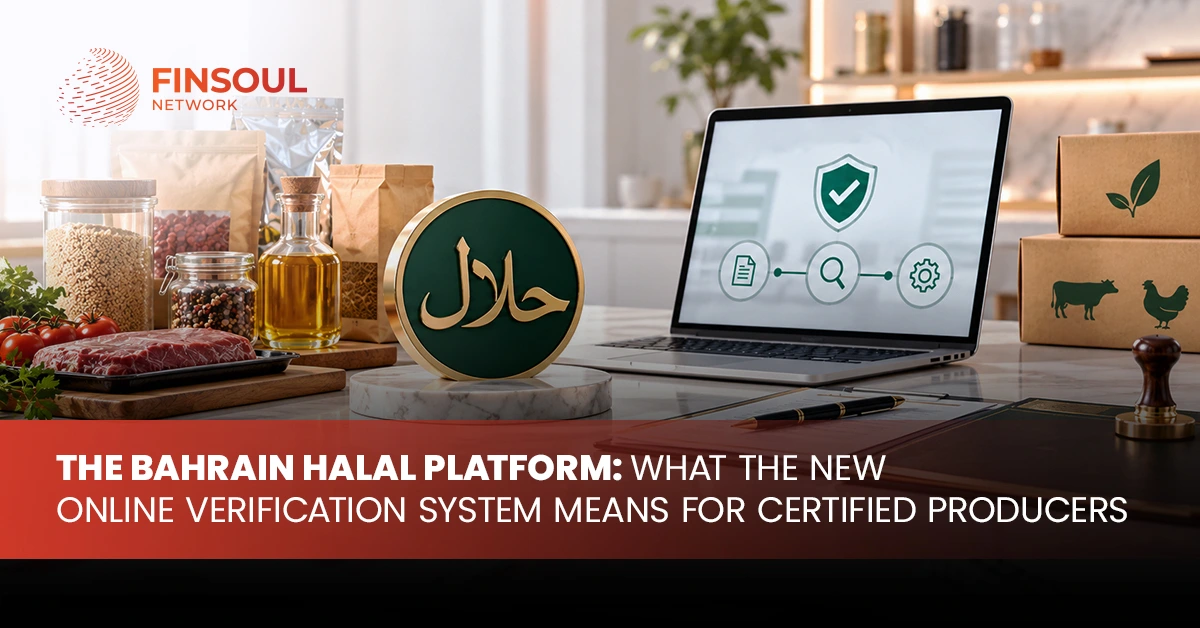
Bahrain has moved its halal certification process online, and the change is bigger than a simple system upgrade. The Bahrain Halal Platform now sits at the center of how producers apply for, track, and renew their halal status in the kingdom. For any business that manufactures, imports, or exports halal food and beverage products, understanding this platform is no longer optional. Finsoul Network Bahrain works closely with producers to help them navigate this shift, and this guide breaks down exactly what the new system means, how it works, and what certified producers need to do next.
What Is the Bahrain Halal Platform
The Bahrain Halal Platform is the official digital system introduced to manage halal certification applications, approvals, and renewals across the kingdom. Instead of submitting paper documents and waiting weeks for manual review, producers now apply, upload documents, and track their certification status through one centralized online portal. The platform connects producers directly with certifying authorities, reducing the back and forth that used to slow down approvals. It also creates a single digital record that buyers, regulators, and trade partners can reference to confirm a product’s halal status at any time.
Why Bahrain Launched a New Online Halal Verification System
Bahrain’s food and beverage export sector has grown steadily, and the old paper-based certification process could not keep pace with demand. Producers faced long processing times, inconsistent documentation standards, and limited visibility into where their applications stood. The new online system was built to solve these exact problems. It standardizes how applications are submitted, shortens review cycles, and gives regulators better oversight of the entire certification pipeline. This move also aligns Bahrain with regional trends, as neighboring Gulf markets have already digitized the Halal certification Bahrain businesses depend on for cross-border trade.
Before this shift, producers often waited months for a single renewal cycle to clear, with little insight into where a file sat inside the review chain. Manual handoffs between departments created bottlenecks that had nothing to do with the actual quality of a producer’s operation. Digitizing the process addresses the administrative delay directly, rather than asking producers to simply wait longer for the same manual system to catch up.
How the Bahrain Halal Platform Verification Process Works
The verification process on the platform follows a clear sequence, though the exact steps can vary slightly depending on the product category.
- Producers create an account and register their business details on the platform
- Product information, ingredient lists, and supplier documentation are uploaded digitally
- The system routes applications to the relevant certifying body for review
- Inspectors may schedule a facility audit before final approval
- Once approved, a digital certificate is issued and linked to the producer’s profile
- Renewal reminders and status updates are sent automatically through the portal
This structure removes much of the guesswork producers used to face. Every stage of Bahrain Halal certification is now visible in real time, which means fewer surprises and fewer delays caused by missing paperwork.
Producers who take time to understand this sequence before applying tend to move through review far more smoothly than those who submit incomplete files and correct them one round at a time. Knowing what an inspector looks for at each stage, from ingredient traceability to labeling accuracy, saves weeks of back and forth later.
Bahrain Halal Certification Requirements for Producers
Producers applying through the platform need to prepare a specific set of documents and information before starting the process. Requirements typically include a valid commercial registration, detailed ingredient and sourcing documentation, supplier halal certificates where applicable, and facility details for inspection scheduling.
| Requirement | Purpose |
| Commercial registration | Confirms the business is legally licensed to operate in Bahrain |
| Ingredient and sourcing list | Verifies raw materials meet halal standards |
| Supplier certificates | Confirms upstream suppliers are also halal compliant |
| Facility layout and process details | Supports inspection and audit scheduling |
| Product labeling samples | Ensures labeling matches certification claims |
Getting these documents right the first time is one of the biggest factors in how quickly a Bahrain Halal certification application moves through review. Producers who assemble a complete file up front, including translated documents where needed, generally avoid the multiple review cycles that stretch out approval timelines for less prepared applicants.
Benefits of the Bahrain Halal Platform for Certified Producers
Moving certification online brings real, measurable advantages for producers who depend on halal status to access markets.
Faster Processing Times
Digital submissions and automated routing cut down the manual handling that used to slow approvals. Producers using the new system typically see shorter turnaround times compared to the old paper process.
Greater Transparency
Every application stage is tracked and visible to the producer. There is no more waiting on a phone call to find out if a document was received or reviewed.
Stronger Market Access
A verifiable digital certificate strengthens trust with international buyers and distributors, particularly in markets that increasingly expect digital proof of Halal certification Bahrain producers can present on demand.
Easier Renewals
Automated reminders and pre-filled renewal forms reduce the risk of certification lapsing, which protects continuous market access. For producers exporting on tight retail contracts, an expired certificate can halt shipments overnight, so this single feature carries more business weight than it might first appear.
Who Benefits Most From the New System
Certain businesses feel the impact of this shift more than others, largely because of how often they interact with the certification process.
- Food manufacturers exporting to Gulf and international markets
- Restaurant chains and catering companies seeking group certification
- Importers who need to verify halal status of incoming products
- Meat and poultry processors subject to routine facility audits
- Ingredient suppliers whose certificates feed into larger producer applications
- Small and medium producers with limited administrative staff
Each of these groups relies on fast, predictable certification cycles to keep operations running, and the digital process gives all of them a clearer view of where they stand at any given time.
Common Challenges Producers Face During the Transition
Not every business finds the shift to digital certification straightforward. Common obstacles include:
- Uploading incomplete or inconsistent documentation
- Difficulty mapping old paper records to the new digital format
- Uncertainty about which product categories require additional inspection steps
- Limited internal staff time to manage the application process
- Confusion around renewal timelines and notification settings
- Errors in ingredient or supplier data that trigger review delays
Most of these issues are avoidable with proper preparation before submitting an application through the platform. A short internal review of documentation before submission catches the majority of errors that would otherwise trigger a rejection or a request for resubmission.
The Future of Halal Certification in Bahrain
As Bahrain continues expanding its food export capacity, the platform is expected to add further features, including deeper integration with customs and trade documentation systems. This means certified producers will likely see even more of their compliance workflow move online over time. Staying current with these changes now puts producers in a stronger position as certification standards continue to evolve alongside regional trade requirements.
Final Thoughts
The shift to the Bahrain Halal Platform marks a real turning point for certified producers across the kingdom. Faster processing, clearer tracking, and stronger market credibility all make the transition worthwhile, even if the learning curve feels steep at first. Finsoul Network Bahrain helps producers prepare accurate documentation, manage the application process, and stay ahead of renewal deadlines, so certification becomes one less thing to worry about while the business keeps growing.
Ready to Simplify Your Bahrain Halal Certification?
Navigating the Bahrain Halal Platform does not have to be complicated. From preparing the right documentation to managing applications, inspections, and renewals, Finsoul Network Bahrain can help your business move through the halal certification process with greater confidence and fewer delays.
Whether you are applying for certification for the first time or transitioning an existing certificate to the digital system, our team can help you understand the requirements and prepare your application correctly.
Need help with Bahrain Halal certification? Contact us today and take the next step toward a smoother certification process.
Office Address: Office 41, Building 2737, Road 3649, Seef, Al Manama 436, Bahrain
Email: info@finsoulnetwork.com
Phone: +973 3383 2422
Frequently Asked Questions
What is the Bahrain Halal Platform used for?
It is the official online system producers use to apply for, track, and renew their Bahrain Halal certification without submitting paper documents.
How long does certification take through the new system?
Processing times vary by product and facility, but most applications move faster than they did under the old paper-based process.
Do existing certificate holders need to reapply?
Producers with active certificates generally transfer their records into the new system rather than starting the application from scratch.
What documents are required for Halal certification Bahrain applications?
Producers need commercial registration, ingredient and sourcing details, supplier certificates, and facility information for inspection scheduling.
Can small producers use the platform without outside help?
Yes, though many choose to work with a consultancy to prepare documentation correctly and avoid delays during review.