
Blog

Commercial ISO 27001 Certification
Blog

Commercial ISO 27001 Certification in Bahrain: Why Banks and Fintechs Need It First

Bahrain’s financial sector runs on trust, and one breach or leaked customer file can undo years of that trust in a single headline. Commercial ISO 27001 Certification has moved from a nice-to-have credential to an operational requirement for any bank or fintech handling sensitive financial data in the Kingdom. Finsoul Network Bahrain works with financial institutions across Manama to close the gaps auditors flag most often, and this article walks through why certification cannot wait, what it actually involves, and how the process plays out from first audit to final certificate. Regulatory Pressure Is Building Faster Than Most Firms Realise The Central Bank of Bahrain has tightened its expectations around information security in recent years, and cyber incident reporting rules now sit alongside data protection obligations under the Personal Data Protection Law. Banks and fintechs that cannot demonstrate a structured security framework face longer license reviews and slower partner onboarding. Commercial ISO 27001 Certification gives regulators and partners a recognised, auditable answer instead of an internal policy document nobody outside the company has ever seen. What the Standard Actually Requires ISO 27001 is not a single checklist; it is a full management system built around identifying risks and controlling them consistently. The certification body checks that a firm has: A documented Information Security Management System covering people, process, and technology A risk assessment that maps real threats to real business assets Controls from Annex A applied where the risk assessment says they matter, covering areas like access control, cryptography, supplier security, and incident response Evidence that the system is actually followed, not just written down A management review process that keeps the whole thing current For a bank, this often means proving that customer transaction systems, core banking platforms, and staff access rights are all covered. For a fintech, the same logic applies to APIs, cloud infrastructure, and third-party payment integrations. Why Banks Move on This First Banks in Bahrain sit under direct CBB supervision, and security expectations are baked into the rulebook modules that govern licensing and ongoing conduct. A bank that delays Commercial ISO 27001 Certification risks findings in its regulatory inspections, and those findings tend to slow down everything from new product approvals to correspondent banking relationships abroad. International banking partners increasingly ask for the certificate before agreeing to route transactions or share data, which makes it a commercial necessity as much as a compliance one. Why Fintechs Cannot Afford to Wait Either Fintechs move faster than traditional banks, but that speed often means security processes get built after the product rather than alongside it. Investors and enterprise clients now ask fintechs for proof of a working security framework before signing contracts, and a certificate carries more weight than a self-written security policy. Fintechs that work with ISO 27001 certification services Bahrain providers early tend to avoid the costly rework that happens when security gets bolted on after a funding round or a partnership deal is already on the table. Banks and Fintechs: Where the Priorities Differ Focus Area Banks Fintechs Primary driver CBB rulebook compliance Investor and partner due diligence Highest risk area Core banking and branch networks Cloud infrastructure and APIs Typical timeline pressure License renewal cycles Funding rounds and partnership deals Common gap found in audits Legacy system access controls Third-party vendor risk management The Certification Journey From Start to Finish Getting certified follows a fairly consistent path, though the pace depends on how mature the firm’s existing security practices already are. Gap assessment. A qualified assessor reviews current policies, systems, and controls against the standard and produces a clear list of what is missing before any work on Commercial ISO 27001 Certification begins. This step alone often saves months later, since it stops teams from building controls in the wrong order. Risk assessment and treatment. The firm identifies its actual information security risks and decides which Annex A controls address them, documenting the reasoning for each decision. Building the management system. Policies, procedures, and records get put in place, and staff start following them in daily operations rather than just on paper. Internal audit and management review. The firm tests its own system before the external auditor arrives, catching gaps while there is still time to fix them. Stage 1 and Stage 2 external audit. An accredited certification body first reviews documentation, then conducts an on-site audit to confirm the system works in practice. Most banks and fintechs in Bahrain complete this journey in four to nine months, depending on how much groundwork already exists. What Auditors Actually Look For Auditors spend most of their time checking evidence, not reading policy documents. They want to see access logs that match the access control policy, incident tickets that show a real response process, and training records that prove staff understands their responsibilities. A firm that treats Commercial ISO 27001 Certification as a paperwork exercise almost always gets flagged during the Stage 2 audit, while one that builds the habits into daily work usually passes with only minor findings. Mistakes That Push Certification Timelines Back Even firms with a genuine commitment to security can lose months to avoidable errors. The most common ones show up early, often before the external auditor is ever booked: Assuming existing IT policies already meet the standard without a proper gap assessment Writing procedures that do not match what staff actually do day to day Leaving third-party vendors and cloud providers out of the risk assessment Treating the internal audit as a formality instead of a genuine test Underestimating how long staff training and awareness building takes Finding the Right ISO 27001 Consultants Bahrain Banks Rely On Not every consultant understands financial sector regulation, and a generic security firm can miss the CBB-specific context that makes or breaks a bank’s audit. Look for ISO 27001 consultants Bahrain teams have already used for licensed institutions, since they will know exactly how examiners think and what evidence carries weight. A good consultant also stays involved after certification, helping the firm prepare
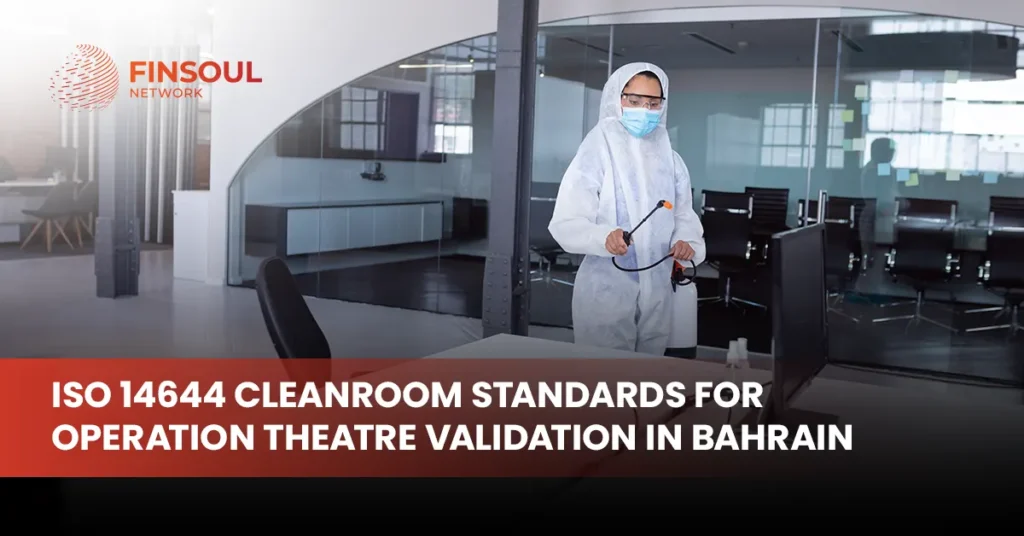

ISO 14644 cleanroom standards in Bahrain
Blog

ISO 14644 Cleanroom Standards for Operation Theatre Validation in Bahrain

Hospitals and day-surgery centers across the Kingdom are under growing pressure to prove that their operation theatres are genuinely sterile, controlled environments, not just on paper, but under real testing conditions. That’s exactly what ISO 14644 cleanroom standards in Bahrain are designed to verify. At Finsoul Network Bahrain, we work with healthcare facilities to turn this technical standard into a practical, auditable compliance process, rather than a confusing checklist nobody fully understands. Beyond meeting regulatory expectations, proper cleanroom validation helps minimise contamination risks, protect patient safety, and improve the reliability of surgical procedures. Regular testing and documented compliance also strengthen accreditation efforts, reduce operational risks, and demonstrate a facility’s commitment to maintaining the highest standards of healthcare quality. This guide breaks down what ISO 14644 actually requires, how operation theatre validation works locally, what it costs, and how to keep your facility compliant year-round. What Is ISO 14644 and Why It Matters for Bahrain’s Hospitals ISO 14644 is an international family of standards that defines how cleanrooms and controlled environments, including hospital operation theatres, should be classified, tested, and monitored. It covers particle concentration limits, airflow behavior, pressure differentials, and the testing methods used to confirm all of it. For any facility pursuing ISO 14644 cleanroom standards in Bahrain, this isn’t a one-time paperwork exercise; it’s an ongoing engineering and monitoring commitment tied directly to patient safety and infection control. Bahrain’s healthcare sector, both public and private, increasingly references this standard when licensing new surgical facilities or renewing operating permits, which is why understanding it properly matters more each year. Understanding ISO Certification Bahrain Requirements for Hospitals Getting ISO certification Bahrain authorities and accreditation bodies will recognize involves more than installing a good HVAC system. Facilities need documented evidence of design qualification, installation qualification, operational qualification, and performance qualification, each mapped back to ISO 14644 clauses. Auditors typically expect calibration records, airflow visualization studies, and a clear maintenance schedule alongside the classification report itself. Many hospitals underestimate this stage and treat certification as a formality, only to fail their first audit because supporting documentation wasn’t structured correctly from day one. Cleanroom Classifications Under ISO 14644 Bahrain Standards Under ISO 14644 Bahrain facilities typically classify operation theatres somewhere between Class 5 and Class 8, depending on the type of surgery performed. Orthopedic and implant surgeries generally demand a stricter classification than general surgical suites, because airborne particle tolerance is far lower where open wounds or implants are involved. Classification isn’t a label you choose; it’s the result of actual particle counting under “at-rest” and “operational” conditions, tested with calibrated particle counters at specified sampling points across the room. Key Parameters Tested During Operation Theatre Validation Bahrain Operation theatre validation Bahrain projects generally test five core parameters: Airborne particle count: measured at rest and during simulated activity Air change rate per hour (ACH): confirming sufficient dilution and removal of contaminants Room pressure differential: ensuring air flows from clean to less-clean zones, not the reverse Temperature and humidity: within ranges that limit microbial growth Recovery time: how quickly the room returns to its classified state after a disturbance Each of these ties directly back to ISO 14644’s technical clauses, and a facility can fail validation on just one parameter even if everything else passes. Step-by-Step Cleanroom Validation Bahrain Process A typical cleanroom testing Bahrain engagement follows this sequence: Design review: checking HVAC layout, filter placement, and room geometry against ISO 14644 principles Installation checks: confirming HEPA filters, ductwork, and pressure zones are built as specified Baseline testing: particle counts, airflow velocity, and pressure readings taken at rest Operational testing: the same measurements repeated under simulated working conditions Documentation and certification: compiling results into a formal validation report with classification stated clearly Facilities that skip the design review step often discover expensive structural issues only after installation, which is why early involvement of a validation partner saves both time and budget. Regulatory Bodies Overseeing ISO 14644 Cleanroom Standards in Bahrain Compliance expectations for ISO 14644 cleanroom standards in Bahrain are shaped largely by the National Health Regulatory Authority (NHRA) and the Ministry of Health, both of which reference international cleanroom benchmarks when licensing surgical facilities. While Bahrain doesn’t operate a separate national cleanroom standard, ISO 14644 is the reference framework most commonly cited in facility audits, tender documents, and hospital accreditation reviews. This makes it essential for facility managers to work with validation providers who understand both the technical standard and how local regulators interpret it in practice. Common Compliance Gaps in Bahrain Operation Theatres Across audits, a handful of issues repeat themselves: HEPA filters installed but never leak-tested, pressure differentials that drift out of range within months of certification, and monitoring logs that stop being maintained once the initial certificate is issued. None of these are dramatic failures on their own, but together they’re the most common reason facilities lose accreditation on renewal. Ongoing monitoring, not just the initial test, is what keeps a theatre genuinely compliant rather than compliant on paper for one day a year. Cost Factors for ISO 14644 Cleanroom Standards Compliance in Bahrain Pricing for ISO 14644 cleanroom standards in Bahrain compliance varies based on theatre size, existing HVAC condition, and classification target. Rough cost drivers include: Number of operation theatres being tested Target classification (Class 5 testing costs more than Class 8) Whether it’s initial validation or periodic re-qualification Remedial work needed after baseline testing (filter replacement, ductwork sealing, etc.) Facilities pursuing certification for the first time should budget for both the testing itself and a contingency for corrective work, since it’s rare for a facility to pass every parameter on the first attempt. Choosing the Right Partner for ISO Certification Bahrain Not every testing provider offering ISO certification services in Bahrain has the calibration equipment or documentation experience hospitals actually need. Look for partners who provide traceable calibration certificates, clear reporting against specific ISO 14644 clauses, and support beyond the one-time test, including guidance on what to fix if a parameter fails. Maintenance and Ongoing Monitoring

ISO 22000 Certification Bahrain
Blog

How much does ISO 22000 certification cost and how long does it take in Bahrain?

Food businesses across Bahrain are under growing pressure to prove that what they produce, store, and serve is genuinely safe. Whether you run a small catering kitchen in Sitra or a large food manufacturing plant in Manama, buyers, regulators, and retail partners increasingly expect businesses to demonstrate internationally recognized food safety standards. If you are exploring ISO 22000 Certification Bahrain for the first time, two questions almost always come first: what will it cost, and how long will it take? The answer depends on several factors, including the size of your business, the complexity of your operations, your current food safety practices, and the certification body you choose. While every organization follows the same ISO 22000 framework, the investment and implementation timeline can vary significantly from one business to another. Understanding these factors before you begin can help you plan your budget, avoid unnecessary delays, and make informed decisions throughout the certification process. This guide explains the typical costs, realistic timelines, and the key factors that influence both, while also providing practical insights into the certification journey with guidance from Finsoul Network Bahrain. What Is ISO 22000 Certification and Why Bahrain Businesses Need It ISO 22000 is the international standard for Food Safety Management Systems (FSMS). It combines the principles of HACCP (Hazard Analysis and Critical Control Points) with general management system requirements, so that hazards are identified, controlled, and continuously monitored at every stage of the food chain from raw material sourcing to final delivery. For companies pursuing ISO 22000 Certification Bahrain, the standard is more than a compliance checkbox. Bahrain’s food sector is expanding quickly across hospitality, retail, export, and manufacturing, and local authorities, along with GCC trade partners, expect documented proof of food safety practices. Holding ISO 22000 signals to regulators, customers, and tender committees that your food safety controls meet a globally recognized benchmark, not just a local one. ISO 22000 Certification Cost Bahrain: What Determines the Price There is no single fixed number when it comes to ISO 22000 certification cost Bahrain businesses should expect to pay, because pricing depends on several variables. Based on typical market patterns for food safety certification in the region, the main cost drivers are: Company size and number of employees: more staff usually means more training and documentation work. Complexity of food handling processes: a bakery has a simpler scope than a multi-line food processing facility. Current state of your food safety system: businesses starting from scratch pay more than those with existing HACCP plans. Choice of consultant: engaging an experienced local partner for gap analysis and implementation adds a professional fee but reduces audit failure risk. Certification body audit fees: charged separately by the accredited body that issues your certificate. Training costs: awareness sessions and internal auditor training for staff. Ongoing surveillance audits: annual or periodic audits needed to keep the certificate valid. For small and medium food businesses, total certification costs (consultancy, training, and audit fees combined) often fall in a moderate range, while larger, multi-site operations naturally pay more due to broader audit scope. The safest approach is to request a tailored quote after a short gap assessment, since ISO 22000 certification cost Bahrain figures quoted online are only ever indicative. How Long Does ISO 22000 Certification Take in Bahrain Timelines vary with organizational readiness, but most food businesses pursuing ISO 22000 Certification Bahrain complete the journey within roughly three to six months. Smaller operations with simple processes and strong existing hygiene practices can sometimes finish faster, while larger or multi-branch companies may need longer to document and embed procedures across every site. The overall duration depends on: How quickly documentation can be drafted and approved. Staff availability for training sessions. How many nonconformities are found during internal audits and how fast they are closed. Scheduling availability of the external certification body. Working with a consultant who understands local timelines typically shortens this window because the gap analysis, documentation, and internal audit stages run in a structured, parallel sequence rather than being handled reactively. ISO 22000 Certification Process Bahrain: Step-by-Step Understanding the ISO 22000 certification process Bahrain authorities and certification bodies expect helps you plan resources and avoid delays. The typical stages are: 1. Gap Analysis An assessment compares your current food safety practices against ISO 22000 requirements, identifying missing controls, documentation, and training needs. 2. Documentation Development Policies, procedures, HACCP plans, and records are drafted to match the standard’s clauses, including hazard analysis, operational prerequisite programs, and traceability systems. 3. Staff Awareness Training Employees at all levels need to understand food safety responsibilities, from kitchen staff to management, so the system is actually followed day to day, not just written down. 4. Implementation The documented FSMS is put into practice across operations, monitoring critical control points, keeping records, and following corrective action procedures when deviations occur. 5. Internal Audit Before the external audit, an internal audit checks whether the system works as intended and flags nonconformities for correction. 6. Management Review Leadership reviews audit findings, performance data, and improvement opportunities, demonstrating top management commitment, a core ISO 22000 requirement. 7. Certification Audit (Stage 1 and Stage 2) An accredited certification body conducts a documentation review (Stage 1) followed by an on-site audit (Stage 2) to verify the system is implemented effectively. 8. Certificate Issuance Once nonconformities, if any, are closed, the certification body issues the ISO 22000 certificate, typically valid for three years with annual surveillance audits. Following this ISO 22000 certification process Bahrain, businesses can budget both time and cost realistically instead of being caught off guard midway through. Why Work with an ISO 22000 Consultant Bahrain Many businesses attempt certification without external support and find the documentation and audit-readiness stages more time-consuming than expected. An experienced ISO 22000 consultant Bahrain team can bring several advantages: Faster, more accurate gap analysis based on prior industry experience. Ready-to-adapt documentation templates instead of building from zero. Practical staff training that fits daily operations rather than generic slides. Better preparation for the external audit, reducing the

required documents for ISO 9001 certification
Blog

ISO 9001 Certification Required Documents and Procedures in Bahrain: Complete Guide (2026)

Getting ISO 9001 certified in Bahrain starts with one question every business owner asks: what are the required documents for ISO 9001 certification, and how do you actually get through the process without wasting months on paperwork? At Finsoul Network Bahrain, we work with companies across Manama, Riffa, and Muharraq that want a clear, practical answer to that question. Many businesses assume ISO 9001 certification is all about creating paperwork, but the real objective is building a Quality Management System (QMS) that improves consistency, customer satisfaction, and operational efficiency. When the required documents for ISO 9001 certification and the right procedures are prepared from the beginning, the certification process becomes faster, smoother, and far less stressful. Understanding the required documents for ISO 9001 certification, the ISO 9001 certification process Bahrain businesses follow, and the essential ISO 9001 procedures Bahrain companies must implement will help you prepare for certification with confidence. You’ll also avoid common documentation mistakes that often delay audits and increase certification costs. What Is ISO 9001 Certification and Why It Matters in Bahrain ISO 9001 is the international standard for quality management systems. It proves that your business has consistent processes for delivering products or services, tracking performance, and fixing problems before they affect customers. In Bahrain’s competitive sectors, from construction to manufacturing to logistics, holding this certification often becomes a condition for winning government tenders or working with larger regional partners. Understanding the required documents for ISO 9001 certification early saves businesses weeks of back-and-forth with certification bodies. Companies that prepare documentation properly the first time move through audits faster and avoid the common trap of scrambling to produce records mid-audit. Bahrain’s economy is diversifying quickly, and buyers across construction, manufacturing, and logistics increasingly expect suppliers to prove their quality standards on paper, not just in conversation. A certified quality management system signals to banks, government tender committees, and international partners that a company can be trusted to deliver consistently, which is often what separates a shortlisted bidder from one that gets passed over entirely. Required Documents for ISO 9001 Certification Every business pursuing ISO 9001 needs a defined set of documents ready before the certification audit begins. These form the backbone of your quality management system and are the first thing an auditor reviews. Document Purpose Quality Policy Statement Defines the company’s commitment to quality objectives Quality Manual Outlines how the QMS meets ISO 9001 clauses Scope of the QMS States which processes and locations are covered Standard Operating Procedures (SOPs) Documents how core processes are actually performed Risk and Opportunity Register Records identified risks and mitigation actions Internal Audit Records Shows evidence of self-assessment before certification Management Review Minutes Confirms leadership involvement in the QMS Corrective Action Records Tracks how nonconformities are resolved These required documents for ISO 9001 certification are not optional extras. Auditors specifically check for gaps between what a document says and what actually happens on the ground, so accuracy matters more than volume. ISO 9001 Certification Process Bahrain Businesses Follow The ISO 9001 certification process Bahrain companies go through generally follows five stages, and skipping any of them creates delays later. 1. Gap Analysis A consultant or internal team reviews current practices against ISO 9001 requirements and identifies what’s missing. This step shapes everything that follows. 2. Documentation Development This is where the required documents for ISO 9001 certification get drafted, including the quality manual, SOPs, and policy statements. 3. Implementation Staff is trained on the new procedures, and the QMS is put into daily practice across departments. 4. Internal Audit Before the official audit, an internal review checks whether documented procedures match real operations. 5. Certification Audit An accredited certification body conducts a two-stage audit: first reviewing documentation, then verifying implementation on-site. Stage one focuses almost entirely on paperwork. The auditor checks whether the quality manual, policies, and procedures actually meet ISO 9001’s clauses and flags any obvious gaps before scheduling the on-site visit. Stage two is where the real test happens, since auditors interview staff, observe day-to-day operations, and compare what they see against what the documentation claims. Any mismatch between the two becomes a nonconformity that has to be corrected before the certificate is issued, which is why businesses that treat documentation as a living record rather than a one-time exercise tend to pass without complications. ISO 9001 Procedures Bahrain Companies Must Have in Place Beyond documents, ISO 9001 procedures Bahrain businesses must actively run include document control, internal audit scheduling, corrective action handling, and customer feedback tracking. These procedures need to be repeatable, not just written down once and forgotten. Auditors will ask staff directly how they follow a given procedure, so training matters as much as documentation. A well-run set of quality procedures a team can point to consistently is often the difference between passing certification on the first attempt and receiving a list of nonconformities to fix before a follow-up visit. Common Mistakes That Delay ISO 9001 Documents Required Many businesses underestimate how detailed the ISO 9001 documents required actually are. The most frequent issues we see include: Quality manuals copied from templates without customization to actual operations Missing evidence of internal audits or management reviews SOPs that describe an ideal process rather than what employees actually do No clear record of corrective actions taken after past nonconformities Scope statements that don’t match the certification body’s understanding of the business Fixing these before the audit stage is far cheaper than fixing them after a failed assessment. Regulatory Context for ISO 9001 Certification Bahrain ISO 9001 certification Bahrain businesses pursue must come from a certification body accredited under a recognized international accreditation framework, such as IAF-affiliated bodies. Bahrain does not issue ISO certificates through a single government authority; instead, businesses select an accredited third-party certifier. This makes choosing the right certification partner, and preparing the correct documentation in advance, even more important for a smooth outcome. Cost and Timeline Expectations Certification timelines in Bahrain typically range from 2 to 6 months depending on company size

SO documentation requirements
Blog

ISO Documentation Requirements for Bahrain Companies Seeking Certification

Bahrain businesses across manufacturing, construction, healthcare, and financial services are turning to ISO standards to win contracts, satisfy regulators, and build trust with international partners. Yet most certification delays come down to one issue: incomplete or poorly structured paperwork. Understanding the ISO documentation requirements early saves companies weeks of rework during the audit stage. Proper documentation not only supports a smoother certification process but also helps businesses improve internal consistency, reduce operational risks, and demonstrate compliance with internationally recognized standards. At Finsoul Network Bahrain, we work with businesses every day that underestimate how detailed these records need to be. This guide breaks down every document type, process step, and compliance body you need to know before you apply, helping you prepare with confidence and avoid common documentation mistakes that can delay certification. What Are ISO Documentation Requirements and Why They Matter The ISO documentation requirements exist to prove that a company’s processes are consistent, controlled, and repeatable, not just written down on paper. Auditors do not certify intentions. They certify evidence, and that evidence lives entirely in your records, manuals, and procedures. Bahrain companies pursuing ISO certification Bahrain approval often assume a policy statement and a few procedures will suffice. In reality, certification bodies expect a structured documentation system that covers planning, operations, monitoring, and corrective action. Missing even one required record can push an audit into a nonconformity, which delays your certificate and adds cost. The scale of documentation grows with company size, but even a ten-person office needs a working set of policies, procedures, and records before an auditor will consider the system mature enough to certify. Types of ISO Certification Documents Every Company Needs Every ISO standard, whether it is 9001, 14001, or 45001, asks for a core set of ISO certification documents that auditors check first. These form the backbone of your management system and rarely change between industries. Quality or system policy stating leadership’s commitment to the standard Scope statement defining what parts of the business the certification covers Procedures describing how key processes are carried out and controlled Work instructions for specific tasks that need step-by-step guidance Records proving that procedures were actually followed Risk registers identifying and tracking operational risks Objectives and targets showing measurable performance goals tied to the standard Auditors read these documents together, not in isolation. A policy that promises customer satisfaction means little without records showing complaints were logged, investigated, and closed. Mandatory Documentation by ISO Standard Different standards layer additional records on top of the core set. Knowing which apply to your certification saves time during preparation and stops teams from drafting documents they do not actually need. ISO 9001 Quality Management Documentation Companies need documented information on quality objectives, customer feedback handling, and nonconformity records. Internal audit reports and management review minutes are also mandatory, and both must show dated evidence that leadership actually reviewed the system rather than signing off from memory. ISO 14001 Environmental Management Documentation This standard requires an environmental aspects register, legal compliance records, and evidence of emergency preparedness procedures specific to your operations, such as spill response plans for manufacturing sites or waste disposal logs for facilities handling hazardous materials. ISO 45001 Occupational Health and Safety Documentation Businesses must maintain hazard identification logs, incident investigation reports, and training records that show workers understand safety procedures relevant to their roles. Toolbox talk attendance sheets and near-miss reports also strengthen this part of the file. The ISO Certification Process Bahrain Companies Should Follow Understanding the ISO certification process Bahrain businesses go through helps you prepare documents in the right order instead of scrambling before an audit. Gap analysis against the chosen standard to identify missing documentation Document development covering policies, procedures, and records Implementation period where staff apply the new system in daily work Internal audit to catch gaps before the external body arrives Certification audit, split into a documentation review and an on-site assessment Each stage of the ISO certification process Bahrain companies follow depends heavily on how organized the paperwork is going into it. Rushed documentation almost always shows up as findings during stage two audits, and reopening a nonconformity after the fact costs far more time than getting it right the first time. How to Organize Your ISO Documentation Requirements A document control system keeps versions, approvals, and revisions traceable, which auditors check specifically. Number every procedure, assign an owner, and set a review date so nothing goes stale between audits. Cloud-based document management tools work well for Bahrain companies with multiple sites, since staff can access the latest approved version instead of outdated printed copies. Keeping the ISO documentation requirements centralized also makes surveillance audits, which happen annually after certification, far less stressful. A simple master list showing document number, version, owner, and last review date is usually enough for smaller businesses to stay audit-ready year-round. Benefits of Getting Your Documentation Right the First Time Well-organized records do more than satisfy an auditor. They cut onboarding time for new staff, reduce repeat mistakes on the shop floor, and give management a clear picture of where operations are strong or weak. Companies with mature documentation also tend to pass surveillance audits with fewer findings, which keeps the certification active without last-minute scrambling. Strong documentation also supports tender applications and client due diligence, since many procurement teams now ask for evidence of ISO records before shortlisting a supplier. A well-maintained file can shorten that vetting process considerably, giving Bahrain companies a real edge over competitors who scramble to assemble records only when asked. Common Documentation Mistakes That Delay Certification Many businesses lose weeks correcting avoidable errors. The most frequent ones include copying generic templates without adapting them to actual operations, missing signatures or approval dates on procedures, and failing to keep records that match what procedures describe. Auditors flag any gap between what a document says and what actually happens on the floor, and this single issue accounts for a large share of nonconformities raised during Bahrain audits. Regulatory Bodies Relevant

ISO 14001 Bahrain
Blog

ISO 14001 and Environmental Permits in Bahrain: What Businesses Need to Know

Companies operating in Bahrain face growing pressure to prove they manage their environmental impact responsibly. ISO 14001 Bahrain compliance has become a practical requirement for firms that want to win contracts, satisfy regulators, and operate without disruption. As environmental expectations continue to rise across industries, businesses are also expected to demonstrate structured environmental management practices that reduce risks, improve resource efficiency, and support long-term sustainability goals. At Finsoul Network Bahrain, we work with businesses across the Kingdom to make sense of certification requirements and permit obligations so operations stay on track. This guide breaks down what ISO 14001 means for Bahraini businesses, how it connects to environmental permits, the benefits of implementing an Environmental Management System (EMS), and the practical steps needed to achieve and maintain compliance. Understanding ISO 14001 Bahrain: An Overview ISO 14001 is the internationally recognised standard for environmental management systems. Businesses pursuing ISO 14001 Bahrain certification build a structured framework to identify environmental risks, reduce waste, and meet legal obligations tied to their operations. The standard applies to companies of any size, from small manufacturers to large industrial operators. The standard is built around a cycle of planning, implementation, review, and improvement, so environmental performance keeps advancing rather than staying static after the initial audit. This structure gives leadership a clear view of environmental risk alongside financial and operational risk, which is increasingly expected by investors and insurers as well as regulators. In Bahrain, the standard works alongside national environmental law. The Supreme Council for Environment (SCE) sets the regulatory baseline, while ISO 14001 Bahrain certification demonstrates that a company has gone further by embedding environmental controls into daily operations. Many clients and government tenders now list this certification as a prerequisite, which makes it a competitive necessity rather than an optional extra. Why Environmental Permits Bahrain Matter for Compliance Environmental permits Bahrain authorities issue are separate from ISO 14001 certification but closely linked to it. A permit confirms that a business meets specific legal thresholds for emissions, waste disposal, water discharge, or resource use. Operating without the correct permit can lead to fines, suspended operations, or rejected project approvals. Businesses often assume certification alone satisfies every legal requirement. It does not. Regulators require separate permits covering activities such as industrial discharge, hazardous waste handling, and construction near sensitive sites. A company with strong ISO 14001 practices in place typically finds the permit application process smoother, since the documentation and monitoring records already exist. The ISO 14001 Certification Bahrain Process Explained Achieving ISO 14001 certification Bahrain businesses can rely on follows a defined sequence. The process starts with a gap analysis to compare current practices against the standard’s requirements. From there, the company builds an environmental management system, trains staff, and runs internal audits before inviting an accredited certification body to assess the system. Initial Gap Assessment The first step identifies where existing environmental practices fall short of ISO 14001 requirements, giving the business a clear roadmap for improvement. System Development and Implementation The company documents policies, sets measurable objectives, and assigns responsibility for environmental performance across departments. Certification Audit An accredited body reviews the management system in two stages, checking documentation first and then verifying practices on-site before issuing certification. Ongoing Monitoring and Recertification Once a business completes ISO 14001 certification Bahrain auditors approve, it must maintain regular internal reviews and surveillance audits to keep the certificate valid. Certification typically runs on a three-year cycle, with annual checks confirming the management system still reflects actual site practices. Businesses that treat this as a one-time project rather than an ongoing discipline often struggle at renewal, so building monitoring into daily operations from the start pays off later. Types of Environmental Permits Bahrain Businesses Need Bahraini businesses may need one or more of the following permits depending on their sector and activities: Industrial operating permits for manufacturing and processing facilities Air emissions permits for facilities generating airborne pollutants Wastewater discharge permits for companies releasing treated or untreated water Hazardous waste handling and disposal permits Environmental impact assessment approvals for new construction projects Coastal and marine activity permits for operations near Bahrain’s shoreline Each permit type carries its own application requirements and renewal schedule, which is why many companies coordinate permit management alongside their ISO 14001 Bahrain implementation. How an ISO 14001 Consultant Bahrain Can Help Working with an experienced ISO 14001 consultant Bahrain business owners trust can shorten the certification timeline considerably. Consultants bring familiarity with local regulatory expectations, common audit findings, and the documentation certification bodies expect to see. An ISO 14001 consultant Bahrain teams engage typically handles the gap assessment, drafts the environmental management system documentation, trains internal staff, and prepares the business for the external audit. This support reduces the risk of failed audits and repeated certification cycles, which can be costly for businesses on tight project timelines. For companies juggling environmental permits Bahrain applications alongside certification, a consultant can also align the two processes so documentation serves both purposes at once. This coordination matters most for businesses operating under tight project deadlines, where a delayed permit or failed audit can stall an entire construction or industrial launch. Benefits of ISO Certification Bahrain for Growing Companies ISO certification Bahrain companies pursue delivers benefits beyond regulatory compliance. Certified businesses often reduce waste disposal costs, lower resource consumption, and strengthen their standing with clients who prioritise sustainable suppliers. Certification also opens access to government and private sector tenders that require ISO 14001 as a bidding condition. Beyond commercial gains, ISO certification Bahrain builds a documented track record that protects the business during regulatory inspections. When environmental incidents occur, a certified management system shows regulators that the company had reasonable controls in place, which can reduce liability exposure. Certified companies also tend to see fewer operational disruptions. Clear procedures for handling waste, emissions, and resource use mean fewer surprises during site inspections, and staff who understand their environmental responsibilities catch problems before they escalate into violations or costly cleanup work. Industries in Bahrain That Need ISO

HACCP vs ISO 22000 in Bahrain
Blog

HACCP vs ISO 22000 in Bahrain: A Complete Guide for Food Businesses

Food businesses across Bahrain face a common question early in their compliance journey: should you pursue HACCP or ISO 22000? The debate around HACCP vs ISO 22000 in Bahrain comes up constantly among restaurant owners, food manufacturers, and exporters trying to meet local regulations while building trust with customers.  Finsoul Network Bahrain works with food businesses every week that are unsure which certification fits their operation, and this guide breaks down the differences so you can make an informed decision. Whether you run a small catering unit or a large food processing plant, understanding HACCP vs ISO 22000 in Bahrain will save you time, money, and unnecessary rework. This guide is structured around the real questions businesses ask before starting their certification journey. What Is HACCP and How It Works in Bahrain HACCP, or Hazard Analysis Critical Control Point, is a food safety system built around identifying and controlling hazards at specific points in the production process. It follows seven core principles: hazard analysis, identifying critical control points, setting critical limits, monitoring procedures, corrective actions, verification, and record keeping. Businesses pursuing HACCP certification Bahrain typically start here because it is a practical, hands-on system focused directly on food handling and preparation. Why HACCP Matters for Bahrain Food Operations Bahrain’s food authorities expect businesses handling raw or perishable ingredients to demonstrate control over biological, chemical, and physical hazards. A restaurant kitchen, bakery, or food processing line can apply HACCP without needing a full management system overhaul, which makes it accessible for small and mid-sized operations. Many businesses pursue HACCP certification Bahrain as their first compliance milestone before considering broader management standards. What Is ISO 22000 and How It Works ISO 22000 is an internationally recognized food safety management system standard that incorporates HACCP principles but wraps them inside a broader management framework. It requires interactive communication across the supply chain, system management, prerequisite programs, and continual improvement through the Plan-Do-Check-Act cycle. Businesses seeking ISO 22000 certification Bahrain usually do so because they export goods, supply large retailers, or want a globally recognized credential. The Structure Behind ISO 22000 Unlike HACCP, ISO 22000 demands documented policies, management review meetings, internal audits, and a formal quality objective structure. This makes it more comprehensive but also more resource-intensive to implement. HACCP vs ISO 22000 in Bahrain: Key Differences When comparing HACCP vs ISO 22000 in Bahrain, the distinction comes down to scope and depth. HACCP is a food safety technique focused on process control, while ISO 22000 is a full management system standard that includes HACCP as one component. HACCP is generally faster and cheaper to implement, while ISO 22000 requires ongoing management commitment and documentation. Businesses that only need to satisfy local food safety inspections often choose HACCP first, then move to ISO 22000 once they scale or begin exporting. Factor HACCP ISO 22000 Scope Process-specific hazard control Full management system Recognition Widely accepted locally Globally recognized standard Implementation time Shorter Longer Best suited for Kitchens, small manufacturers Exporters, large suppliers Which Businesses in Bahrain Need Which Certification Restaurants and cafes handling perishable ingredients daily typically start with HACCP Hotels running large-scale food and beverage operations often need both systems Food manufacturers supplying supermarkets usually require ISO 22000 Exporters shipping to GCC or international markets almost always need ISO 22000 Catering companies serving government or corporate contracts frequently need HACCP as a baseline Central kitchens supplying multiple outlets benefit from ISO 22000’s structured approach Food Safety Certification Bahrain: The Regulatory Landscape Bahrain’s food safety oversight falls primarily under the Ministry of Municipalities Affairs and Agriculture, alongside health inspection units that review food establishments regularly. Businesses pursuing food safety certification Bahrain must align their internal systems with these local inspection requirements, regardless of whether they choose HACCP, ISO 22000, or both. Import and export businesses also interact with customs and health authorities that often request proof of a recognized food safety system before clearing shipments. Local Inspections and International Standards Local municipal inspections focus on hygiene practices and basic hazard controls, which HACCP satisfies well. International buyers and GCC trade partners, however, increasingly ask for ISO 22000 as a supplier requirement, making it necessary for businesses with export ambitions. Certification Process and Timeline Getting certified generally follows five stages: initial gap assessment, documentation development, staff training, implementation with internal audits, and finally the certification audit conducted by an accredited body. Businesses working with a HACCP consultant Bahrain often move through this process faster because gaps get identified early and documentation gets built correctly the first time. HACCP certification typically takes six to ten weeks for a small to mid-sized operation, while ISO 22000 can take three to six months depending on business complexity. Cost Considerations Certification costs vary based on business size, number of processes involved, and whether external consultants are engaged. HACCP implementation is usually more affordable since it targets specific production points rather than an entire management system. ISO 22000 costs more upfront but often pays off through expanded market access and stronger buyer relationships, particularly for businesses trading beyond Bahrain. Engaging a consultant early tends to reduce rework costs on both certification paths. Benefits of Certification for Bahrain Food Businesses Reduced risk of foodborne illness incidents and related liability Easier compliance during municipal health inspections Stronger credibility with retail buyers and hospitality partners Access to export markets that require internationally recognized food safety systems Improved internal process consistency and staff accountability Better positioning when bidding for corporate or government catering contracts Common Challenges Businesses Face During Certification Many Bahrain food businesses struggle with maintaining consistent documentation once daily operations get busy. Staff turnover also creates gaps in training continuity, especially in kitchens with high seasonal demand. Some businesses underestimate the ongoing commitment ISO 22000 requires, treating it as a one-time project rather than a continuous management practice. Working with an experienced local advisor helps address these gaps before they become audit failures. Choosing the Right HACCP Consultant in Bahrain A good consultant does more than hand over templates. Look for

ISO 9001 Certification Bahrain
Blog

Is ISO 9001 required for government tenders in Bahrain?

Bahraini businesses bidding for public sector contracts often ask the same question before they submit a proposal. Is ISO 9001 required for government tenders in Bahrain? The short answer is that it depends on the tendering authority and the nature of the contract, but in practice, most large government tenders in Bahrain either require it outright or treat it as a major scoring advantage. Even when certification is not mandatory, ISO 9001 Certification Bahrain can improve a company’s technical evaluation score, demonstrate a strong commitment to quality management, and give bidders a competitive edge. Finsoul Network Bahrain provides professional ISO 9001 Certification Bahrain support to help businesses understand exactly where they stand before a bid deadline arrives. From reviewing tender requirements and conducting gap assessments to preparing organizations for certification and strengthening internal quality systems, we help companies become audit-ready, tender-eligible, and more competitive in government and semi-government procurement opportunities. What Is ISO 9001 Certification Bahrain ISO 9001 Certification Bahrain is an internationally recognised quality management standard that proves a company has documented, repeatable processes for delivering consistent work. It covers everything from how you handle customer requirements to how you manage internal audits and corrective actions. For government buyers, this certificate is a quick way to confirm that a supplier will not cut corners once the contract is signed. Companies that hold it are seen as lower risk, which matters enormously in public procurement where accountability is closely watched. The certification itself is issued by an accredited third-party body after they review your documented quality management system and confirms it through an on-site or remote audit. It is not a one-time paperwork exercise. Certified businesses go through annual surveillance audits to keep the certificate active, which is exactly why procurement teams trust it as an ongoing indicator of reliability rather than a snapshot taken years ago. Government Tenders Bahrain: How the Process Works Government tenders Bahrain are typically published through the Tender Board or the relevant ministry’s procurement portal, and each listing sets its own eligibility criteria. Some tenders are open to any registered supplier, while others list mandatory certifications, minimum experience years, and financial guarantees. Understanding this structure early gives bidders time to close any gaps, including certification gaps, before the submission window closes. Businesses that regularly bid on government tenders Bahrain tend to build a standing compliance file rather than assembling documents from scratch each time. This includes company registration papers, financial statements, previous contract references, and any technical certifications relevant to their sector. Keeping this file current means a business can respond to a new tender within days instead of scrambling to gather paperwork after the fact. Bahrain Tender Requirements and Where Quality Certification Fits Bahrain tender requirements usually fall into three categories: legal and registration documents, technical capability evidence, and financial standing. ISO 9001 sits inside the technical capability section, and for construction, engineering, healthcare supply, and facilities management contracts, it is frequently listed as a mandatory or preferred document. This is precisely where the question is ISO 9001 required for government tenders in Bahrain becomes a practical, not theoretical, concern for procurement teams preparing their bid file. Is ISO 9001 Required for Government Tenders in Bahrain? The Direct Answer Is ISO 9001 required for government tenders in Bahrain in every single case? No, but it is required often enough that skipping it puts a business at a real disadvantage. Larger contracts, multi-year framework agreements, and anything involving public infrastructure or health and safety almost always list it as mandatory. Smaller or short-term tenders may not require it, but bidders who hold it still tend to score higher on technical evaluation sheets. ISO 9001 Certification for Tenders: Why It Changes Outcomes ISO 9001 certification for tenders is not just a compliance checkbox. Evaluation committees use it as a proxy for reliability, which directly affects scoring in the technical section of a bid. A supplier without it may still submit a technically strong proposal, but reviewers often weigh certified bidders more favourably because the certificate signals lower delivery risk. This is one of the clearest reasons why ISO 9001 is required for government tenders in Bahrain, which keeps coming up in pre-bid meetings. Sectors Where ISO 9001 Certification Bahrain Is Mandatory or Strongly Preferred Construction and infrastructure contracts Oil, gas, and energy sector supply chains Healthcare equipment and facilities services IT and telecommunications government projects Facilities management and maintenance contracts Manufacturing and industrial supply tenders These sectors carry higher public risk if quality control fails, which is why procurement teams lean more heavily on ISO 9001 Certification Bahrain as a screening tool. A contractor bidding for a hospital maintenance contract, for instance, faces far more scrutiny than one bidding for a short-term office supplies order. The Role of an ISO 9001 Consultant Bahrain An ISO 9001 consultant in Bahrain helps a business move from “we should get certified” to actually holding a valid certificate before the bid deadline. This includes gap analysis against the current tender requirements, drafting the required documentation, training staff on the new processes, and coordinating the certification audit with an accredited body. Working with an experienced ISO 9001 consultant Bahrain also reduces the chance of rejected paperwork, which is one of the most common and avoidable reasons bids get disqualified. Businesses that try to self-manage certification often underestimate how much internal time it takes to write procedures, run internal audits, and prepare staff for external assessment. A consultant who already understands Bahrain tender requirements can shorten this timeline considerably by reusing proven document templates and flagging exactly which clauses matter most to public sector evaluators. Steps to Get Certified Before Your Bid Deadline Gap assessment: Review current processes against ISO 9001 clauses. Documentation build: Create the quality manual, procedures, and records required. Staff training: Make sure teams understand and follow the new processes. Internal audit: Test the system before the external audit happens. Certification audit: An accredited body reviews and issues the certificate. Answering is ISO 9001 required for government tenders

ISO 13485 Bahrain
Blog

Is ISO 13485 required for NHRA medical device registration in Bahrain?

If your company manufactures, imports, or distributes medical devices in the Kingdom of Bahrain, one question keeps coming up: does ISO 13485 Bahrain certification actually matter for regulatory approval? At Finsoul Network Bahrain, this is one of the most common questions we hear from medical device companies preparing to enter the local healthcare market. In this guide, we explain exactly how the standard connects to NHRA medical device registration, what regulators expect, and how to get compliant without unnecessary delays. Understanding the relationship between ISO 13485 and Bahrain’s regulatory framework can help businesses avoid costly mistakes, repeated documentation requests, and longer approval timelines. Whether you’re launching a new medical device, expanding into Bahrain from overseas, or strengthening your existing quality management system, having the right compliance strategy from the beginning makes the registration process far more efficient and predictable. What Is ISO 13485 Bahrain Certification? ISO 13485 is the internationally recognized quality management system (QMS) standard built specifically for organizations involved in designing, producing, installing, and servicing medical devices. When professionals talk about this certification locally, they mean applying the global standard within the regulatory framework set by the National Health Regulatory Authority (NHRA). It emphasizes risk management, traceability, documentation control, and consistent product quality, exactly the things regulators evaluate closely before approving any device for the local market. Unlike general quality standards, ISO 13485 is built entirely around patient safety and regulatory compliance, which is why it has become so closely tied to local device approval procedures today. NHRA Medical Device Registration: An Overview The NHRA is the government authority responsible for regulating pharmaceuticals, medical devices, and healthcare facilities across Bahrain. Any organization wishing to sell, distribute, or use medical devices in the country must complete registration with the authority before a product can legally enter the market. This process typically evaluates several key areas, including: Device classification based on risk (Class I, II, III, or IV) Manufacturer quality system documentation Technical files and clinical or safety data Local authorized representative details Post-market surveillance commitments This is where ISO 13485 Bahrain compliance becomes central to the entire submission. Reviewers rely heavily on internationally recognized quality certifications to judge whether a manufacturer’s internal systems are reliable enough to support consistent, safe production over time. Is ISO 13485 Bahrain Mandatory for Registration? Here is the direct answer: while the authority does not always list ISO 13485 as a rigid, standalone legal requirement in every single case, in practice it functions as a near-essential condition for approval, especially for Class II, III, and IV devices. Most applications submitted without a valid, current certificate face delays, additional documentation requests, or outright rejection. For lower-risk Class I devices, requirements may be somewhat more flexible, but manufacturers who already hold ISO 13485 Bahrain certification consistently experience faster, smoother approvals across every device category. In short, if a company is serious about long-term market access, this certification is not optional in any practical sense; it is the foundation the entire registration file is built upon. Registration Process Step-by-Step Overview Understanding the full registration journey helps put the role of ISO 13485 certification into proper context and ensures your application is prepared correctly from the start. Device classification: Determine the applicable medical device risk class under Bahrain’s current regulatory guidelines. The classification influences the documentation, review requirements, and approval pathway. Quality documentation preparation: Compile your Quality Management System (QMS) records, technical documentation, and risk management files in line with ISO 13485 Bahrain requirements. Complete and well-organized documentation helps reduce review delays. Local representative appointment: Foreign manufacturers without a physical presence in Bahrain must appoint a local authorized representative. This representative serves as the primary contact for regulatory communication and compliance matters. Application submission: Submit the complete registration dossier through the official regulatory system along with all required supporting documents. Accuracy at this stage minimizes requests for additional information. Technical review: Regulatory reviewers assess the device’s safety, performance, labeling, technical documentation, and quality certifications. They may request clarifications if any information is incomplete or inconsistent. Approval and listing: Once the application meets all regulatory requirements, the device receives approval and is added to the national medical device registry. The manufacturer can then legally market the device in Bahrain, subject to ongoing compliance obligations. Each of these steps depends on accurate, audit-ready documentation, which is precisely what a properly implemented quality system provides from day one. Benefits of ISO 13485 Certification Bahrain for Manufacturers Beyond regulatory approval itself, ISO 13485 certification Bahrain delivers real, measurable business value: Faster approvals, thanks to pre-organized, standardized documentation Fewer product recalls, through stronger risk management practices Greater buyer and hospital trust, since many procurement teams require it outright Easier access to GCC and international markets, as the standard is globally recognized Lower long-term compliance costs, since systems remain audit-ready year-round Companies that treat certification as a genuine strategic investment, rather than a paperwork exercise, consistently outperform competitors in both approval speed and market credibility. Documents Required for Registration To support a complete NHRA medical device registration file, manufacturers generally need the following: Valid ISO 13485 certificate Free Sale Certificate (FSC) or Certificate of Origin Technical documentation and instructions for use Risk analysis reports Labeling and packaging samples Local authorized representative agreement Missing or outdated documentation remains one of the leading causes of delayed applications, which is why maintaining an active, current certificate matters throughout a device’s entire lifecycle, not just at the point of initial submission. Why Work With an ISO 13485 Consultant in Bahrain? Navigating certification requirements alongside regulatory expectations can be genuinely complex, especially for companies unfamiliar with local procedures. This is exactly where an experienced consultant adds real, practical value. A qualified consultant can typically help by: Conducting a gap analysis against ISO 13485 requirements Preparing and aligning documentation with regulatory expectations Guiding internal audits and management review meetings Liaising with certification bodies for a smoother audit process Reducing the overall registration timeline considerably Working with a knowledgeable ISO 13485 consultant Bahrain often makes the difference between a first-attempt

Halal Certification Cost in Bahrain
Blog

Cost of Halal Certification in Bahrain: What Affects Pricing

Businesses across Bahrain’s food, cosmetics, and pharmaceutical sectors are asking the same question before they expand into Muslim-majority markets: what does Halal Certification Cost in Bahrain actually involve, and why do quotes vary so widely between providers? At Finsoul Network Bahrain, we work with manufacturers, exporters, and restaurants every week who need a clear answer before they commit budget to the process. Understanding the factors that influence certification costs helps businesses plan effectively and avoid unexpected expenses during the application process. This guide breaks down the real cost drivers behind Halal Certification Cost in Bahrain, walks through the certification journey, and answers the questions business owners ask most. Whether you are seeking certification for the first time or renewing an existing certificate, having a clear understanding of the process can help you make informed decisions and choose the right certification partner with confidence. What Is Halal Certification and Why It Matters in Bahrain Halal certification confirms that a product, ingredient, or process meets Islamic dietary and ethical standards, covering everything from sourcing to packaging, for businesses operating in or exporting from Bahrain. Holding valid Halal certification Bahrain approval opens doors to GCC retail shelves, halal-only supply chains, and international buyers who require documented proof of compliance. Without it, many contracts and export routes simply stay closed. Understanding Halal Certification Cost in Bahrain upfront helps businesses budget accurately instead of discovering hidden fees midway through the process. Restaurants, food manufacturers, cosmetics producers, and even logistics companies handling halal goods all rely on certification to prove their claims rather than simply stating them. Buyers in Saudi Arabia, the UAE, and other GCC markets increasingly ask for certificate numbers before signing supply agreements, which makes certification a practical trading requirement rather than an optional label. Businesses that treat Halal certification Bahrain approval as a growth investment, rather than a compliance box to tick, tend to plan their budget and timeline far more realistically. Halal Certification Process in Bahrain The Halal certification process Bahrain authorities typically recognize, typically starts with an application to an accredited certification body, followed by document review, facility inspection, and ingredient auditing. Inspectors check raw materials, storage conditions, cleaning protocols, and staff practices to confirm nothing conflicts with halal requirements. Once the audit passes, the certifying body issues a certificate valid for a fixed period, usually one to three years, after which renewal audits apply. Businesses that prepare documentation in advance move through the Halal certification process Bahrain faster and avoid repeat inspection fees. A typical timeline looks like this: application submission, initial document screening, a scheduled site visit, a corrective action window if issues are found, and finally certificate issuance. Each stage depends on how organized the business is. Companies that already run strict hygiene and traceability systems, such as those already ISO certified, often move through the audit stage in a single visit rather than needing follow-up inspections. Factors That Affect Halal Certification Cost in Bahrain Halal Certification Cost in Bahrain is not a fixed number. It shifts based on several practical factors: Business size and production volume: larger factories with multiple product lines require longer audits than a single-product bakery Number of product categories: Certifying five SKUs costs more than certifying one SKU Facility complexity: multi-site operations need audits at every location Certification body chosen: international bodies with GCC and export recognition often charge more than local-only certifiers Renewal frequency: annual renewals add a recurring cost compared to multi-year certificates Consultancy support: businesses using a consultant to prepare documentation pay a service fee but usually pass audits faster, reducing rework costs Because Halal Certification Cost in Bahrain depends on these variables, getting a scoped quote based on your actual operation is more useful than relying on generic online estimates. A single-product bakery serving the local Bahrain market pays a fraction of what a multi-site meat processing plant exporting to three countries would pay, simply because the audit scope and risk level differ so much between the two. It also helps to separate one-time setup costs from recurring renewal costs. Initial certification usually costs more because it includes the full facility audit, documentation build-out, and staff training. Renewal audits are typically lighter and cheaper, provided no major changes were made to the production line, ingredients, or facility layout since the last inspection. Halal Certification Services in Bahrain: What They Include Full Halal certification services Bahrain providers typically go beyond the audit itself. Most packages include a pre-audit gap assessment, documentation preparation, staff training on halal handling procedures, and support in liaising with the certifying body. Some Halal certification services Bahrain clients request also cover supply chain mapping, confirming that raw material suppliers hold their own halal approvals. Choosing a provider that bundles these steps together usually costs less overall than paying for each service separately after a failed first audit. Who Needs Halal Certification in Bahrain Not every business in Bahrain needs certification, but a growing list does in practice. Food manufacturers and processors, restaurants serving certified halal menus, meat and poultry suppliers, cosmetics and personal care brands, and pharmaceutical companies using animal-derived ingredients all commonly pursue certification. Exporters targeting Saudi Arabia, the UAE, Kuwait, and other GCC destinations increasingly find certification is a prerequisite for entering retail distribution rather than a competitive advantage, since major retailers now require it as standard. Documents and Information Required Document / Information Purpose Business registration and trade license Confirms legal operating status Full ingredient and supplier list Verifies raw materials meet halal standards Production process flowchart Shows how contamination risk is controlled Facility layout plan Used during on-site inspection Cleaning and sanitation records Confirms separation from non-halal materials Having these ready before the first meeting shortens the review stage significantly. Regulatory Bodies Overseeing Halal Certification in Bahrain Bahrain’s halal framework connects to national food safety authorities and, for export-focused businesses, to GCC-wide standards bodies that many importing countries recognize. Certifying through a body accredited under these frameworks matters most for companies planning to export, since some destination markets only accept

Scroll to Top